

AV Case Study: Bunjil Theatre Immersive Audio Install
A suburban theatre invests in d&b Soundscape and lowers the barriers into immersive.

18 November 2025
Text:/ Christopher Holder
Immersive audio in a live sound context is niche, pricey, complex and hard to get into. Right? Not so fast. What if I told you that a council-run theatre in the Melbourne outer ‘burbs has been getting regular sound peeps into immersive with minimum hand-holding and zero homework? This is the story of Bunjil Place Theatre.
Bunjil Place in Melbourne’s south east has upgraded its theatre’s audio with a d&b Soundscape immersive package and the whole centre with Allen & Heath DLive mix systems. Thanks to some clever system design by Factory Sound along with some increasingly friendlier front-end software from d&b, Bunjil tech staff are finding it’s getting easier and easier to get visiting engineers to dabble in immersive. The feedback has been positive, proving there’s nothing niche or elitist about immersive – different, for sure, but not unrealistic. “The system lets engineers flip between traditional stereo/LCR and full object-based mixing in minutes,” according to Jono Sinclair, Projects Department Manager at Factory Sound. “That switchability has been key. Guest engineers arrive with pre-programmed stereo shows; the last thing they want is to rebuild everything. Instead, they soundcheck in stereo, get comfortable, then start dropping individual channels into Soundscape as objects. Most end up using every input immersively because it’s so intuitive – and they can always flip back. Some techs still prefer traditional mixing, but the hybrid approach has removed fear. Immersive isn’t scary; it enhances what engineers already do, just with more space and localisation.”

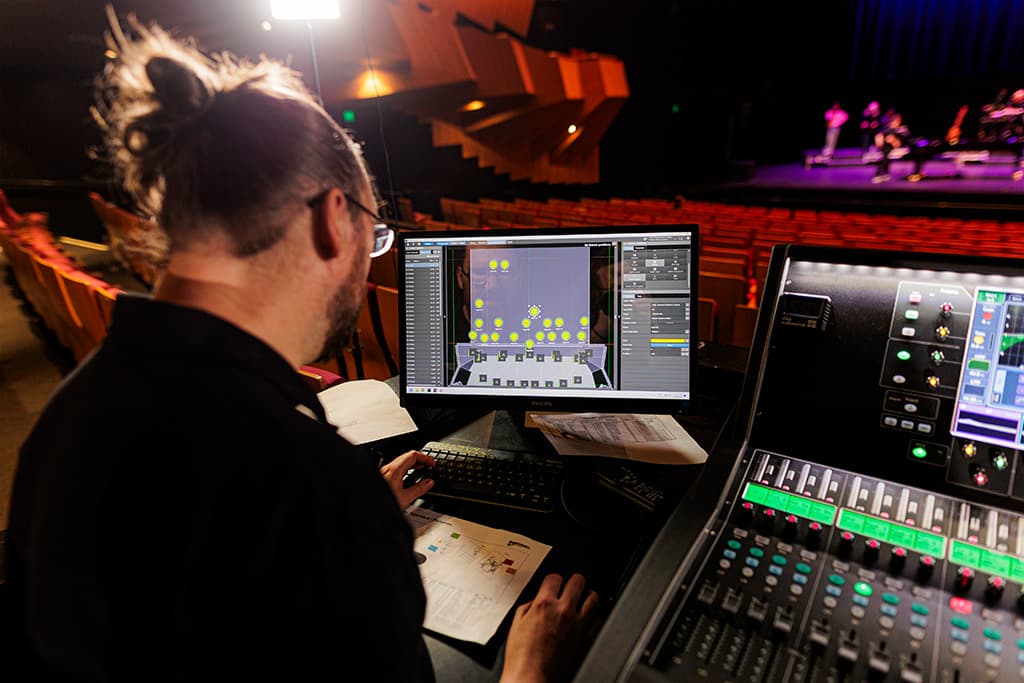
Combining the A&H DLive mixer with d&b Soundscape for a hybrid matrix/object mix approach has proven popular and approachable.
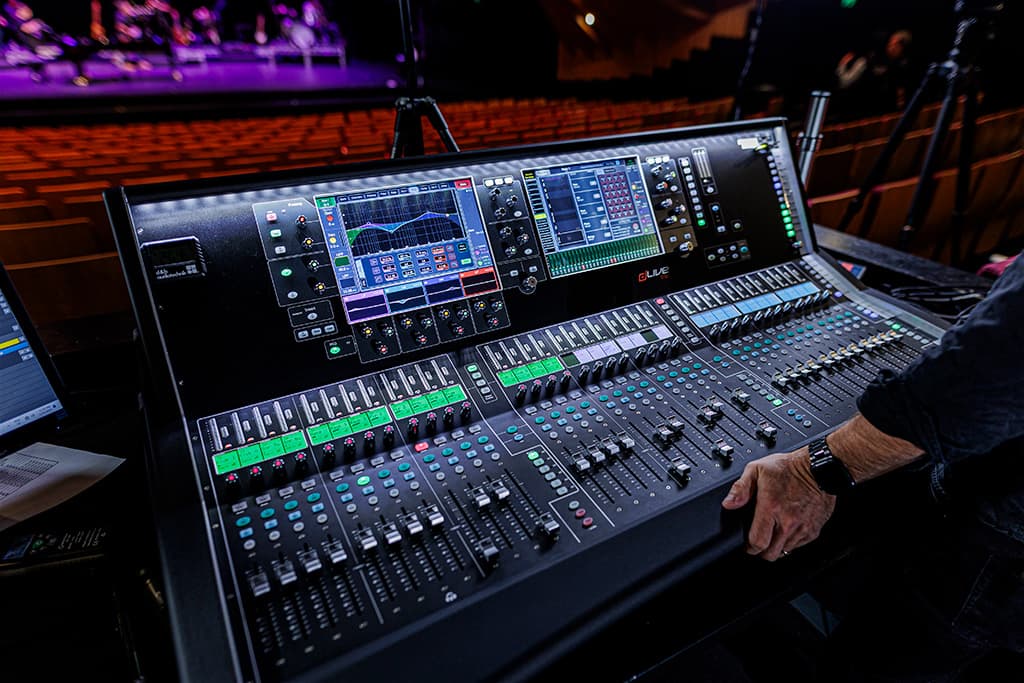
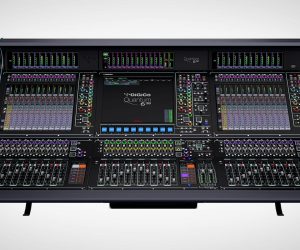
A total of five Allen & Heath DLive mix systems have gone into Bunjil Place.
OBJECT LESSON
d&b is distributed by NAS with Dave Jacques as d&b’s long-time proponent. As a highly credentialed FOH engineer himself, he’s aware of what goes on between the ears of working sound people who naturally don’t want to push the technical boat out without good reason:
“Visiting engineers open the Bunjil tech spec and see ‘Soundscape’. Panic sets in: ‘Will my pre-programmed stereo show translate?’ ‘Will I lose hours?’ Remember, many tours travel with consoles locked to LCR or stereo matrices.
“But Soundscape lets us address the system any way they want: stereo, LCR, full object-based, or hybrid. Factory Sound’s front-end switching makes it seamless. Engineers start in stereo, then enable direct outs on individual channels and position them in space. Within minutes they’re dragging every input into Soundscape because the safety net is there – one click back to stereo.
“The mental barrier is bigger than the technical one. Give engineers the reassurance that they can’t break the show, and creativity explodes. Once they hear localisation – especially under balconies where delays now carry full spatial information – and they’re hooked. The PA disappears; it’s just the band, but louder and clearer.”
ZERO CHANCE OF BREAKAGE
The hardware brains of the operation is the d&b DS100 processor, which can run matrixed feeds (L/R/LCR/sub/front-fill) while simultaneously processing discrete Soundscape objects, allowing the engineer to pull a channel out of the stereo bus, enable its direct out, and place it on the virtual stage. But from the venue’s perspective, and a visiting engineer’s perspective, the extra sonic real estate of Soundscape needed to be easily available regardless of which console is being used (either the A&H DLive house console or a whatever the production might be bumping in) and ensuring it’s all still functioning fine the following day for ‘Morning Melodies’. In other words, unlike a dedicated Soundscape production where the techs work in R1 (d&b’s remote control software) to get the system plumbing right, Factory Sound needed a layer that gives anyone behind any flavour of mixing console the freedom to activate Soundscape features without inadvertently messing with key routing and processing.
Factory Sound’s Jackson Strafford explains further: “To protect the system from tampering we inserted an Allen & Heath DM0 as gatekeeper. The DM0 uses two isolated Dante networks: one as a closed network for Soundscape routing to the amps (admin access only), and one for the engineer behind the console. The DM0 GUI lets users select the input format (Dante/MADI/analogue) and mode (L/R, LCR, immersive) in seconds. We added a global Soundscape mute in case direct outs are accidentally left on.”
Dave Jacques: “Create Control [d&b’s new operator software] has also reduced reliance on R1. Engineers pre-build shows off-site, load them, and never touch the password-locked back end. Multiple instances can run simultaneously – system tech on R1, FOH on Create Control, both seeing the same moves.
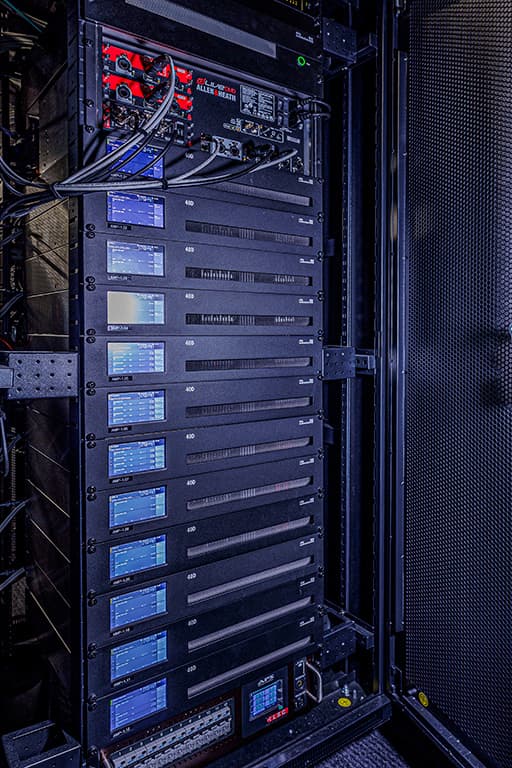
An epic rack of d&b DS40 amps with a A&H DS0 up top. Jackson Strafford: “To protect the system from tampering we inserted an Allen & Heath DM0 as gatekeeper. The DM0 uses two isolated Dante networks: one as a closed network for Soundscape routing to the amps, and one for the engineer behind the console.”
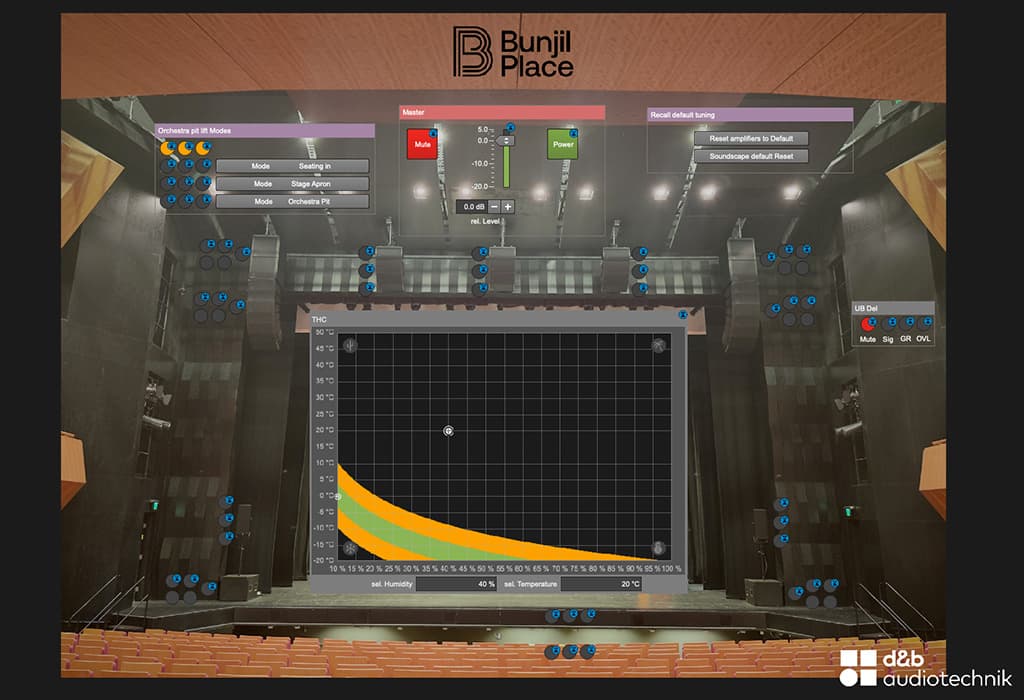
Bunjil d&b R1 operator/system control page
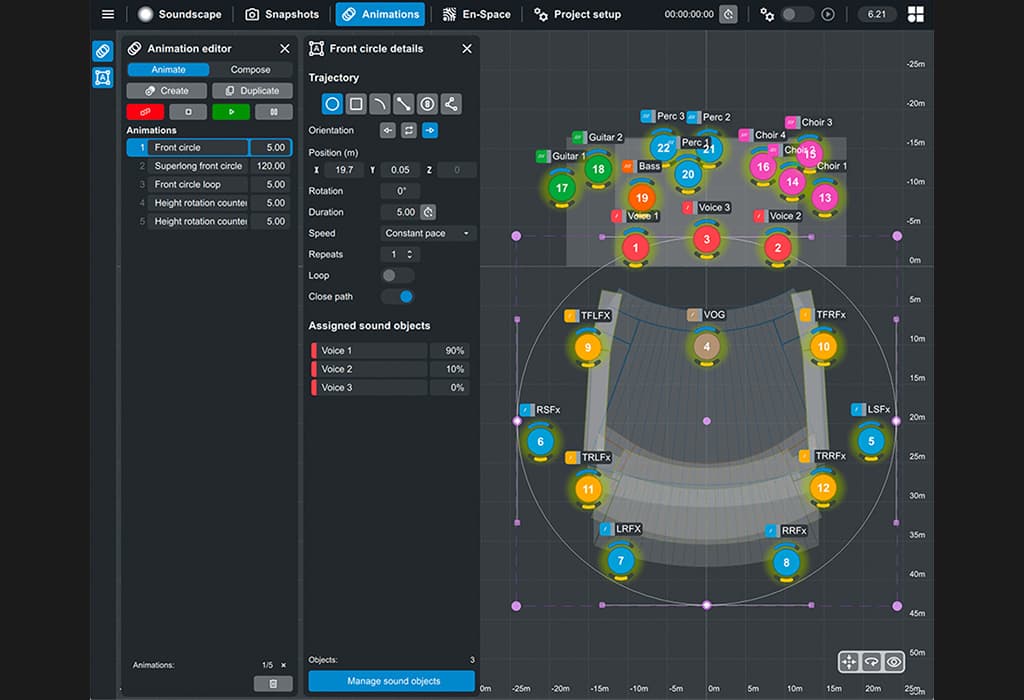
d&b Create Control software screen shot, showing mix engineer positions and automation. This is the new mix engineer interface that allows control of Soundscape automation, positioning, automated trajectories, En-Space reverberation and more. This can be setup offline allowing pre-programming and fast setup as needed.
IN ACTION
Okay, so the system is designed to get into Soundscape – anything from ‘all in’ to toe in – how’s it look the afternoon of a show?
Jackson: As an example, a band arrives with a stereo show. The engineer soundchecks normally. After they’re comfortable, they might pull the lead vocal out of L/R, send to Soundscape, place it onstage where the singer stands. Instantly, they’re hearing the vocals localised across the entire hall. Next, they might put the acoustic guitar slightly behind and to the left. On drums: they can move the kick in/kick out mics in and out relative to each other without any impact on phase – Soundscape does all the calculations without any smearing. The PA breathes; transients stagger naturally.
Dave: Soundscape recalculates time-of-flight for every object. What you see onstage is what you hear – everywhere. Audience members subconsciously mix for themselves because they’re seeing what they’re hearing. You want to focus on that guitar, you can. You want to hear ‘little Johnny’ in the second back row of the choir, you can. The PA disappears.
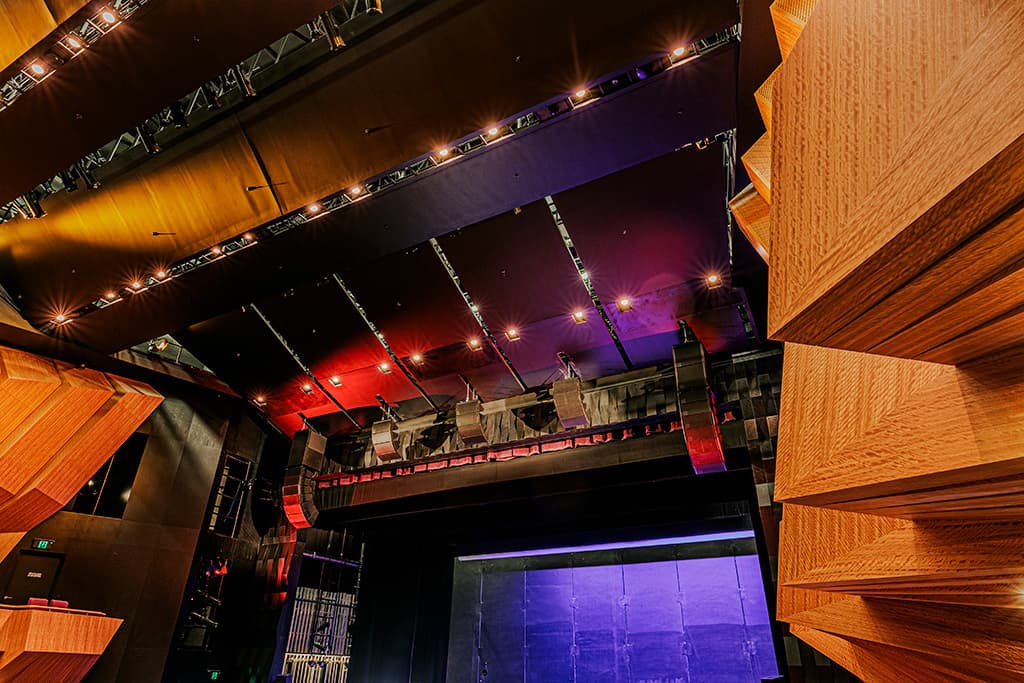
The d&b XSL main hangs with three inside clusters of A-Series.
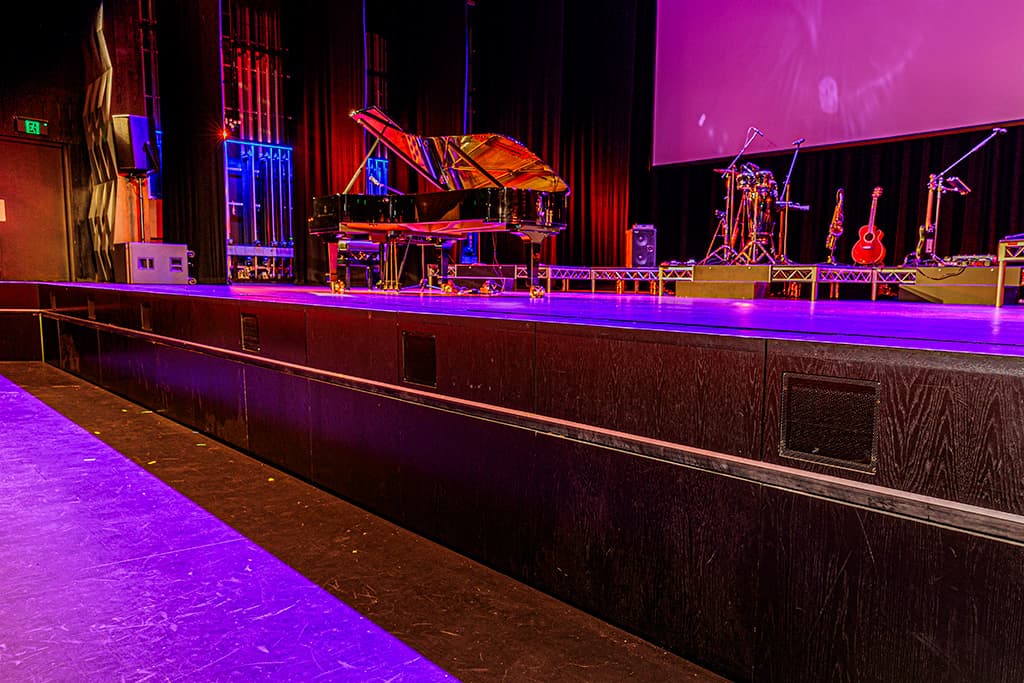
One of the two layers of front fill with one of the hefty V-Series fills.
PA DETAIL
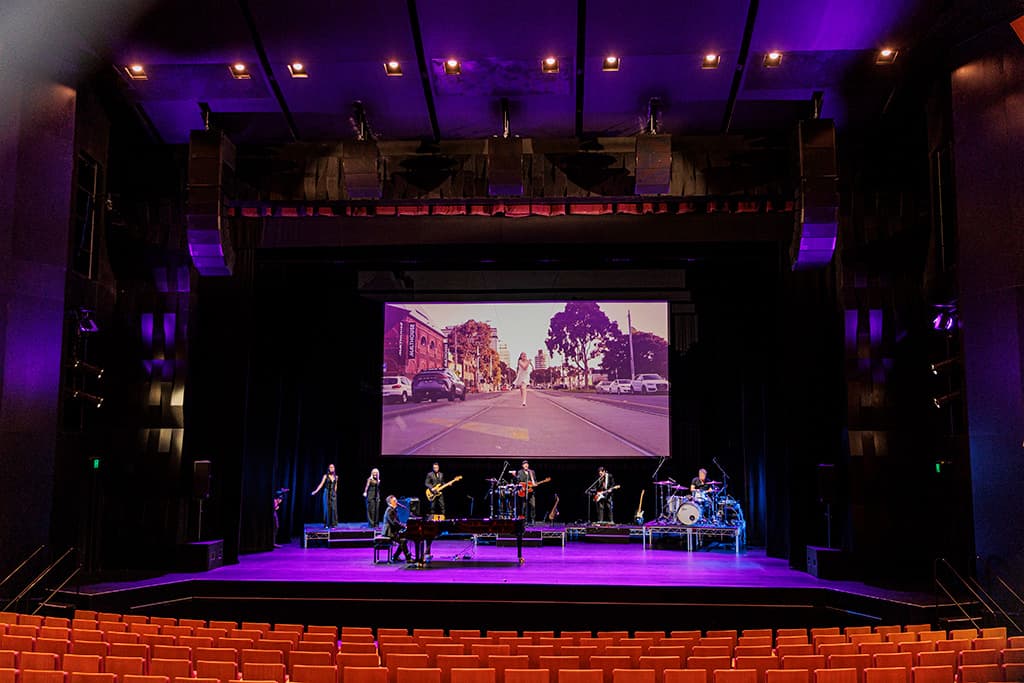
When the PA isn’t ‘disappearing’ it’s based on a L/R hang of d&b XSL, seven deep. If a client wants to run a conventional L/R show, they have a powerful and highly capable house PA, great for rock shows and more. Supporting the two-channel rock show energy are a pair of ground-stacked V-series point source enclosures with companion SL-Subs, which can run hard when desired. They can also be ‘feathered in’ to provide improved imaging in a Soundscape led mix – helping to bring the image down when used with the front fill.
Inside the L/R hangs are three clusters of d&b A Series loudspeakers (four per cluster), which provide the additional resolution for horizontal imaging in support of immersive audio and d&b Soundscape workflows.
There two sets of front fills, configured to accommodate stage pit changes (‘Pit Up’ for seating, ‘Pit Down’ for orchestra), ensuring consistent coverage.
The under-balcony delays – installed to preserve tonal consistency throughout the venue regardless of seating location – are also part of the Soundscape canvas.
An all-XSL design might have been ideal but not financially practical, but the XSL/A-Series combo provides a seamless result, according to Dave Jacques: “It could be problematic without d&b’s ArrayProcessing, which matches tonality and level across arrays. Here, the smaller A-Series arrays work perfectly for immersive because Soundscape spreads energy across multiple hangs. The big XSL left-right system still delivers rock ’n’ roll grunt when needed but tonality is consistent room-wide, so moving from traditional to immersive feels seamless.
“”
It’s now a marketing weapon: state-of-the-art audio that bigger venues use, attracting higher-calibre productions and setting Bunjil apart from every other council house in Victoria
OVERKILL?
You have to ask yourself: is a d&b Soundscape system like this a perfect match for the repertoire of a suburban theatre like Bunjil or overkill? Paradoxically, it’s probably the grassroots material that’s in most need of immersive. Community theatre, school musicals, and the like all disproportionately benefit from the extra sonic space. In some ways it’s the touring tribute bands and their ilk that might well dig their toes in the most – why risk messing with a well-refined show file? And this is the reason why the Bunjil Theatre deployment works so well. There is no risk. And this mid-cap council venue in the suburbs is leading the way in opening the eyes of regular sound guys/gals to the game-changing capabilities of immersive.
The cost? Jono reckons “about 30 percent more than a comparable LCR system.” He goes on: “The Bunjil tech staff had seen immersive elsewhere and lobbied hard for it. Then when the budget allowed it, it was more a case of ‘why wouldn’t we?!’. It’s now a marketing weapon: state-of-the-art audio that bigger venues use, attracting higher-calibre productions and setting Bunjil apart from every other council house in Victoria.”
Bunjil Place: bunjilplace.com.au
Factory Sound: factorysound.com.au
NAS (d&b): nas.solutions
TAG (Allen & Heath): tag.com.au
d&b Soundscape: dbsoundscape.com/global/en/




This is definitely the future
How can I get access to an possibly learn this Tech?