

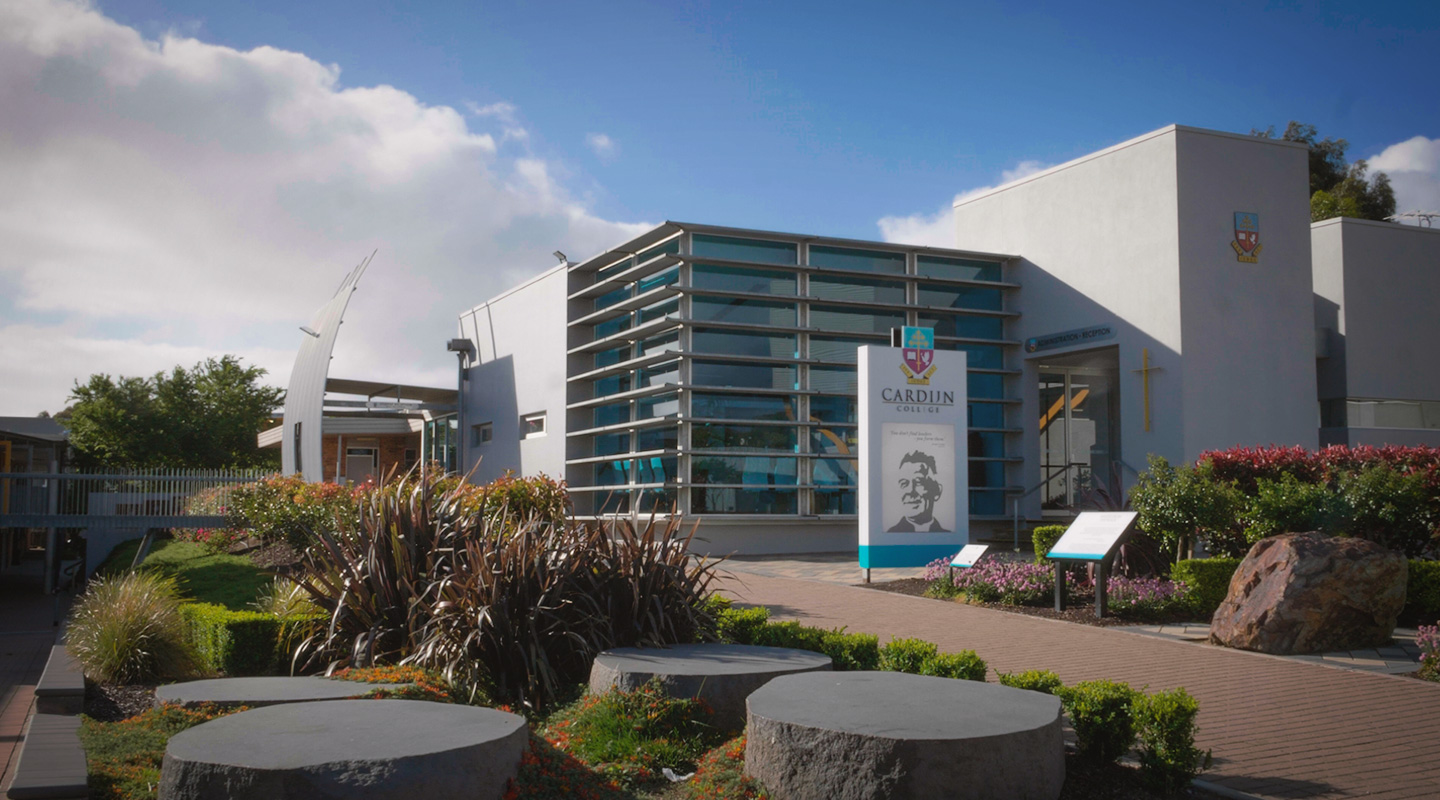
AV Case Study: Cardijn College Paging System
Tony Sayce, ICT Director at Cardijn College, has 2250 students to serve, a team of six and a mountain of tech issues to be across. His Biamp Vocia paging platform isn’t one of them.

11 May 2026
In the world of K-12 AV, reliability might not be glamorous but it is essential. When you’re dealing with 2250 students across three (soon four) campuses, a bell that doesn’t ring or a PA announcement that drops out isn’t just inconvenient; it’s potentially chaos. At Cardijn College in Adelaide’s southern suburbs, Biamp Vocia has been the no-nonsense backbone of daily life for more than a decade.
Tony Sayce, ICT Director across the Cardijn campuses, sums it up: “I don’t touch the Vocia system. It largely runs itself. I don’t need to babysit the devices. The same devices I put in 10, 12 years ago are still running now.”
VOCIA’S VOCATION
Vocia handles two core jobs: bells to move students between classes, and paging for everything from wet-weather announcements to emergency evacuations. Tony explains the zoning logic: “There are three zones: one for staff, one for students when they’re inside, and one for students outside. We can run combinations of those. The front office staff can select whether they want to do everyone – as in staff, students, and outside – or just students and outside.”
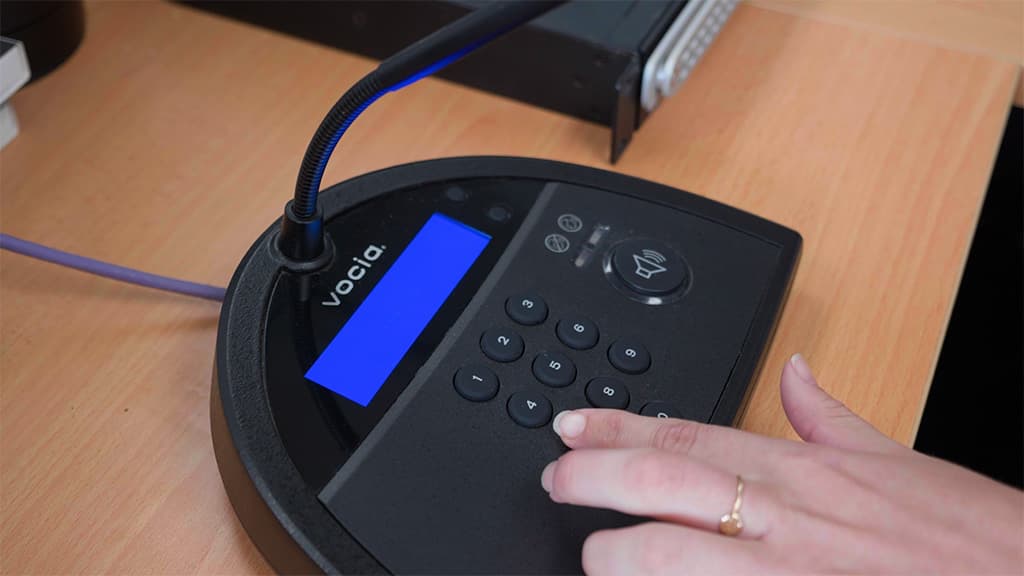
Live announcements come via Biamp DS-10 paging stations dotted around the front office and admin areas. The front-desk team handles most of them, including emergency voice evac: “The admin staff on the front desk are well versed in announcements – we run drills regularly.” It’s manual (live/unrecorded) by design – according to experience and studies, students respond better to the familiar voice delivered live.
ON THE SAME PAGE
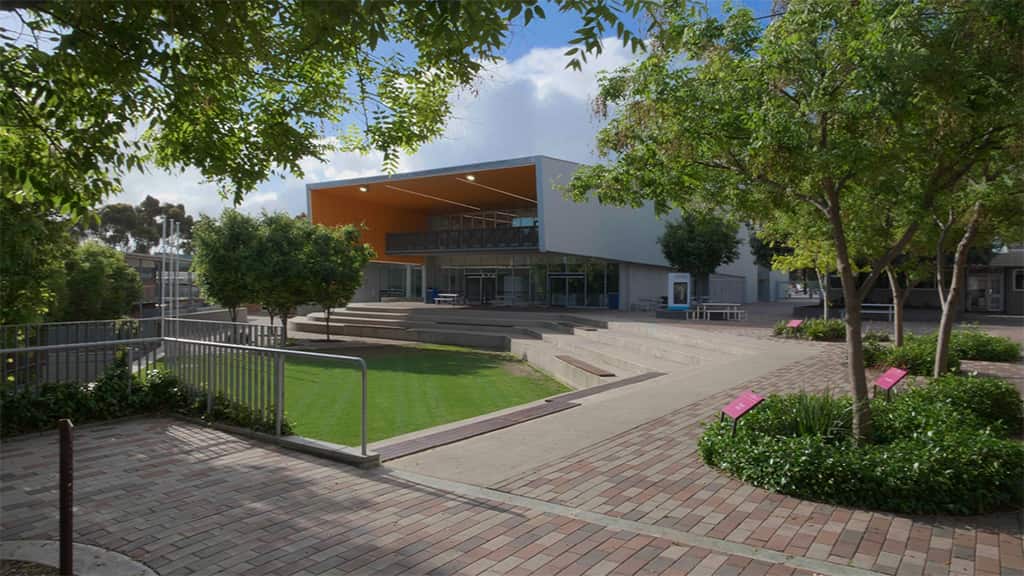
The Vocia setup is elegantly simple and IP-based. A central core processor per campus feeds digital audio over the network to endpoint devices that convert to analogue and drive the amps and loudspeakers. One of the main Marian campus buildings runs all Biamp Voltera amps and in-ceiling speakers.
Vocia might be set ’n’ forget, that is, until you need to expand the system. Thankfully, according to Tony, it scales in a very straightforward way. “It’s very easy to expand. I rarely need to get an integrator on site (Cardijn College has used Adelaide-based systems integrator, Professional Technology Partners, for many years) to do anything. Once you get your head around how it works, it’s actually a very straightforward product.” New buildings or campuses simply add receiver units from the existing core (or a new one for redundancy), leveraging proven configurations. With the upcoming Larkin campus extension and Aldinga build-out (including bells for Years 7–12), Tony plans to replicate what’s already working flawlessly. “I’m perfectly happy with our AV systems integrator, PTP, but I’ve just not needed them.”
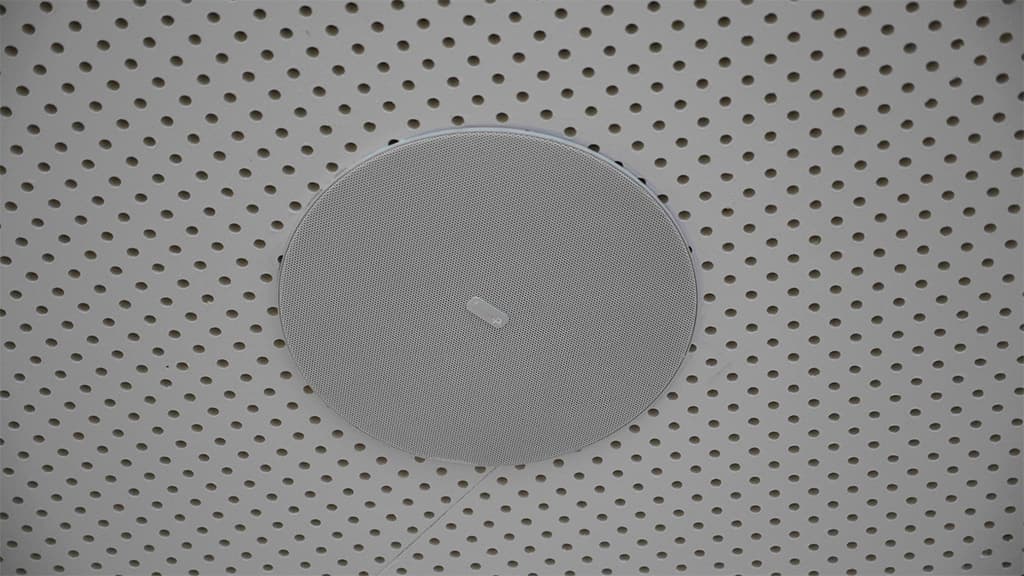
Redundancy is baked in: separate cores per campus mean local PA survives internet outages. Power failures haven’t proved to be a showstopper either. “We had a huge power failure here and at the other campus – the power was out for six or eight hours. After the power kicked back in, Vocia just booted up and worked – didn’t miss a beat. I haven’t had to touch it, which is really nice.”
For a large, multi-campus college, Vocia delivers set ’n’ forget peace of mind. “Having products that just basically run and you don’t have to worry about unless you actually need to make a change is really good. Makes it reassuring that it just works.”
Professional Technology Partners: ptp.net.au
Biamp: biamp.com












RESPONSES