

Jabra Evolve3 Launch
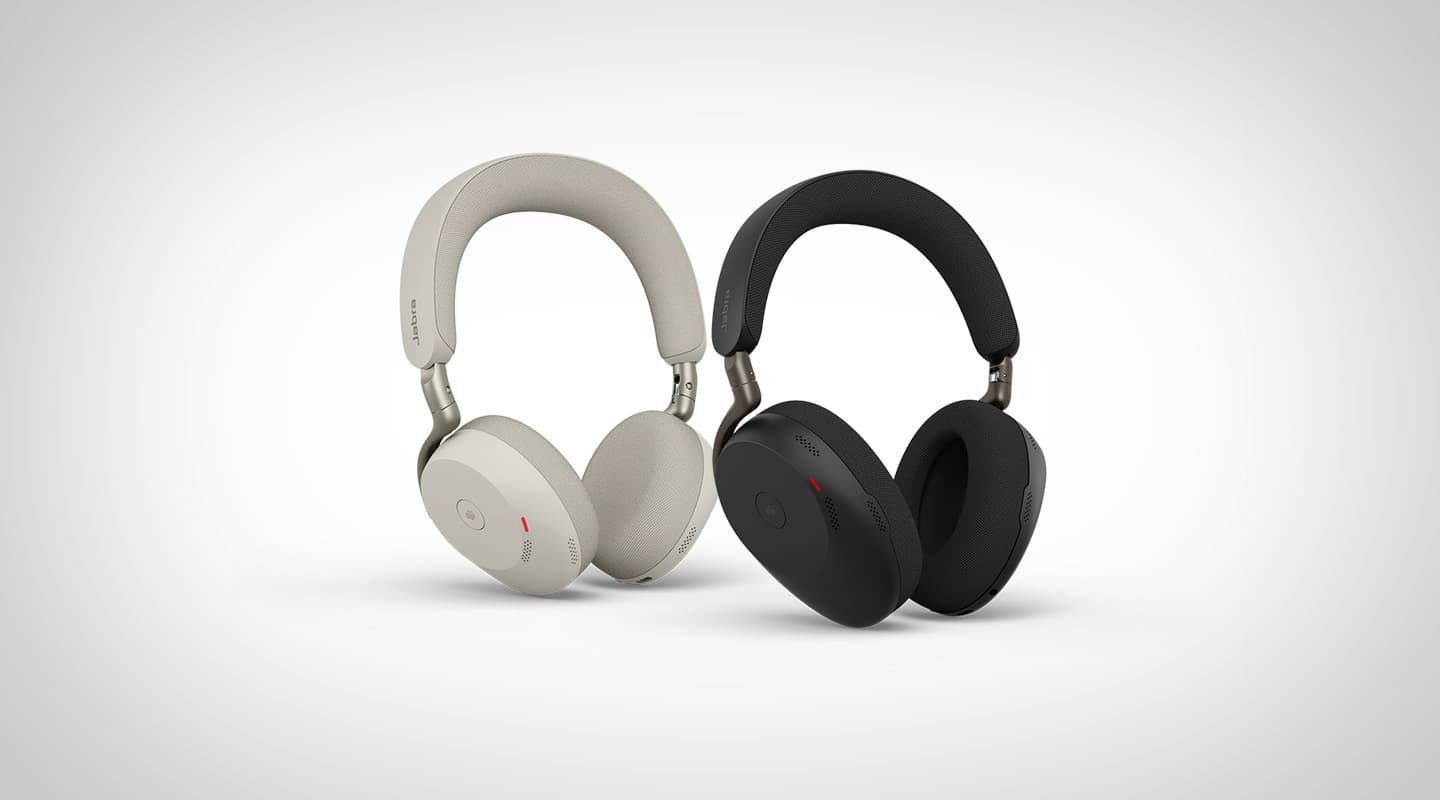
Jabra’s new wireless enterprise-grade headsets are boomless and built to surf the blurred lines of work and play.

11 March 2026
Sydney played host to the Asia Pac premiere of Jabra Evolve3 back on 25 February 2026, marking the arrival of the latest in the company’s headset lineup. The event drew a crowd of tech pros, partners, and media types keen to see how Jabra is tackling the blurring lines between work and personal life. With presentations from Jabra’s own Ling Lu, plus insights from Microsoft and Google Cloud honchos, it was a mix of product deep dives and a fascinating crystal-ball look at AI’s role in everyday tools, and the importance of voice in all of it. A good event.
EVOLUTION OF EVOLVE
The Evolve3 series builds on the Evolve and Evolve2 ranges, introducing a boomless mic design that’s designed to bridge professional needs with a more casual vibe. Available in two models – the over-the-ear Evolve3 85 and the on-the-ear Evolve3 75 – these headsets aim to handle everything from office calls to commuting tunes, without looking out of place in either scenario.
According to the press release, poor sound quality tops the list of gripes for knowledge workers, with 99% saying bad audio hampers online meetings. Yet only 20% use enterprise-grade kit, and nearly half still opt for consumer headsets that fall short on clarity and comfort. Jabra’s pitch with Evolve3 is to deliver pro-level performance in a package that matches consumer expectations on design – think: sleek Danish styling that’s compact and lightweight.
VERY MODERN
Ling Lu, Jabra’s Head of New Product Development, kicked off her presentation by framing Evolve3 as “the best headset for modern work,” though she quickly backed that up with context. She traced the evolution from the original Evolve in 2014, designed for open-plan offices shifting to UC platforms, through Evolve2 in 2020 for flexible setups amid the pandemic. Now, with generative AI tools reshaping productivity, Evolve3 merges call quality, style, and AI readiness.
One standout feature is Jabra ClearVoice, which uses deep neural network (DNN) tech alongside multi-mic algorithms to isolate the user’s voice from background noise. “We’ve removed the boom arm, but we haven’t removed the standard,” Lu explained. “The voice quality is even better without a boom arm in place.” This DNN draws from (Jabra’s parent company) GN Group’s expertise in hearing aids and gaming, processing sound layers to filter out distractions – handy for windy streets or noisy cafes. In tests, it achieves 96% word accuracy in varied environments, rising to 99% in open offices.
Adaptive Active Noise Cancellation (ANC) adjusts in real-time to the surroundings and fit, working during calls as well as music playback. Lu noted how this counters the fatigue of long meetings: “If you’re exposed to those sounds for long hours, it can be very tiring.” Jabra’s spatial tech helps make remote chats feel more like being in the same room, reducing that ‘in-your-head’ exhaustion.
SUPER PORTABLE
Design-wise, both models prioritise portability. The Evolve3 85 is 35% slimmer and 23% lighter than the Evolve2, folding into a compact case. The 75 offers a breathable on-ear fit for better awareness. Breathable fabric on-ear cushions cut heat build-up, and replaceable batteries extend product life. Sustainability gets a nod too, with recycled materials and TCO Generation 10 certification.
Battery life impresses, to say the least: up to 25 hours of calls or 120 hours of music on the Evolve3 85 (ANC off), with fast charging giving 10 hours from 10 minutes! The series supports UC platforms like Microsoft Teams, includes a pre-paired Bluetooth adapter, and pairs with the Jabra Plus app for customisation – EQ tweaks, wind noise reduction, and more. A desktop app follows later in 2026.
ENTERPRISE READY
The event wasn’t just Jabra’s show; Microsoft’s Leon Wright and Google Cloud’s Gary Denman were invited to weigh in on voice’s growing importance in an AI-driven world, highlighting how clear audio underpins everything from translations to agent interactions [see sidebar for more].
Pricing starts at A$719 for the Evolve3 75 and A$979 for the 85, available now. A Warm Grey variant hits select markets in April.
Jabra is a significant player in the enterprise sphere and Evolve3 is a serious enterprise product that is stylish enough to be adopted widely in and out of the office. The Jabra Plus software tools, the Teams certification and security credentials ensure the IT department will give Evolve3 the hall pass it’s after.
Jabra: www.jabra.com/evolve3
“”
Jabra’s pitch with Evolve3 is to deliver pro-level performance in a package that matches consumer expectations on design


“”
Battery life impresses, to say the least: up to 25 hours of calls or 120 hours of music on the Evolve3 85












RESPONSES