
AV Case Study: Nyaal Banyul Geelong Convention & Events Centre
It’s a ‘right-sized’ regional convention centre without technical compromise.

19 October 2026
Interview:/ Christopher Holder
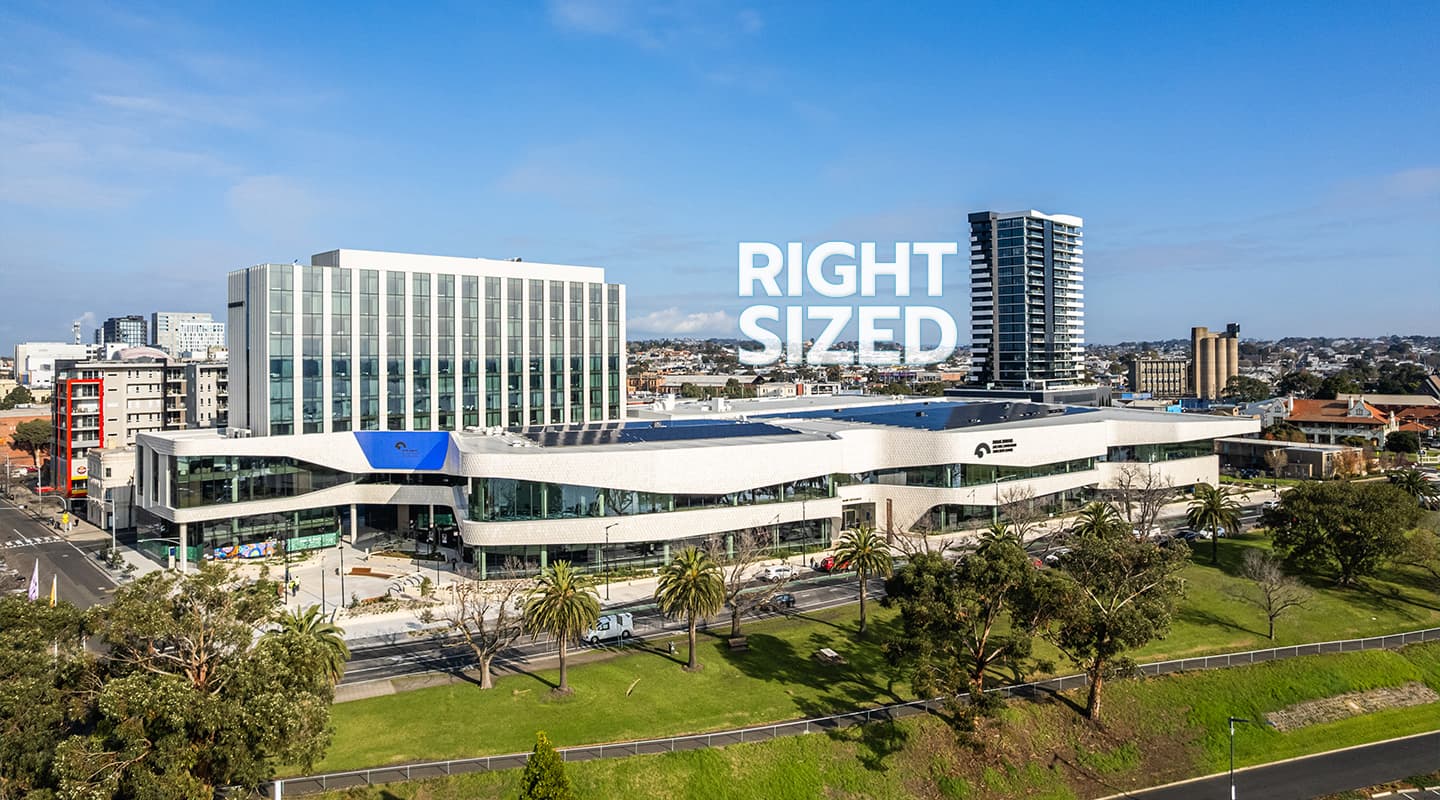
Geelong has waited a long time for a venue that could properly host the full spectrum of events the region generates. Between the large-scale capacity of the GMHBA Stadium (the formidable citadel of the Geelong Cats AFL team) and the more intimate, theatre-focused Geelong Arts Centre sat a gap: a place for gala dinners, mid-scale conferences that feel intimate rather than absorbed into a mega-facility, flat-floor concerts, and exhibitions that local organisers could actually afford to grow into. Nyaal Banyul, the new Geelong Convention and Events Centre on Wadawurrung Country, was designed to close that gap.
Opened as the centrepiece of the Geelong City Deal, the venue comprises the 1000-seat Wala Mirr Theatre, approximately 3700sqm of flexible event space, and a suite of divisible breakout rooms. Senior Manager of Audio Visual Michael Walker, seconded from the Victorian Convention and Event Trust (VCET) after years shaping systems at the Melbourne Convention and Exhibition Centre, describes the brief in practical terms. “We did a lot of qualitative and quantitative research to make sure we right-sized the venue and right-sized its flexibility.”
That principle – flexibility without punitive cost – runs through every technical decision.
SPEECH TO SPECTACLE
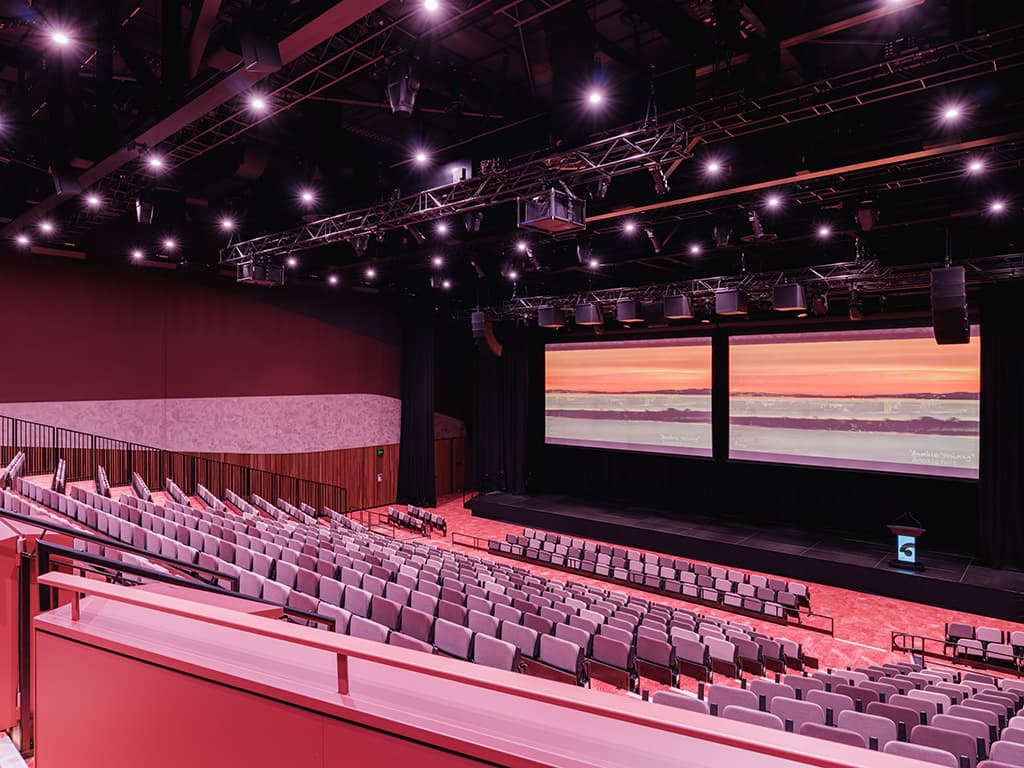
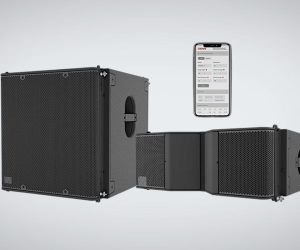
The Wala Mirr Theatre’s primary purpose is around spoken word presentations. Michael Walker set a strict Speech Transmission Index target of 0.7. “Spoken word is probably 85 percent of the use case in any convention centre, but we also have to switch into high-quality headline performance,” he notes. A d&b V Series-based system, supplied by NAS, won the day: left and right seven-enclosure arrays, a three-enclosure centre array for focused speech coverage, a horizontal array of six flown V-Subs, V10P delay loudspeakers covering the balcony, and E8 front fills for image localisation.
d&b’s ArrayProcessing is the behind-the-scenes hero: presets for full tiered seating, half-tier, flat-floor, and varying stage depths (the stage can extend an extra two metres when required) are recalled through the building-wide AMX Muse control system. Walker explains. “We an reset the room with very little additional labour, making it more cost effective for the client. The PA and the presets on the PA are able to seamlessly respond to changes.” The same processing keeps energy directed where it is needed – onto occupied seating rather than empty upper tiers or reflective surfaces – preserving both intelligibility and headroom.
Rider-friendliness was non-negotiable. “One of our big things is to make sure that we’re rider friendly,” Michael Walker says. “A touring event company could come in and look at the installed PA and say, ‘I’ll leave mine in the truck.’”
d&b M4 stage monitors (x 15) take care of foldback (“they’re a one-man lift but plenty powerful enough”), all powered by 40D amplification.
Michael Walker knew they needed a extremely capable portable PA as well, not only for ad hoc performances and presentations in public spaces or meeting room but also for the exhibition venue. For most use cases, Delama will use its distributed QSC loudspeakers mounted in the ceiling but the d&b V10P plus subs package will provide the necessary grunt for high-impact projected content or live music.
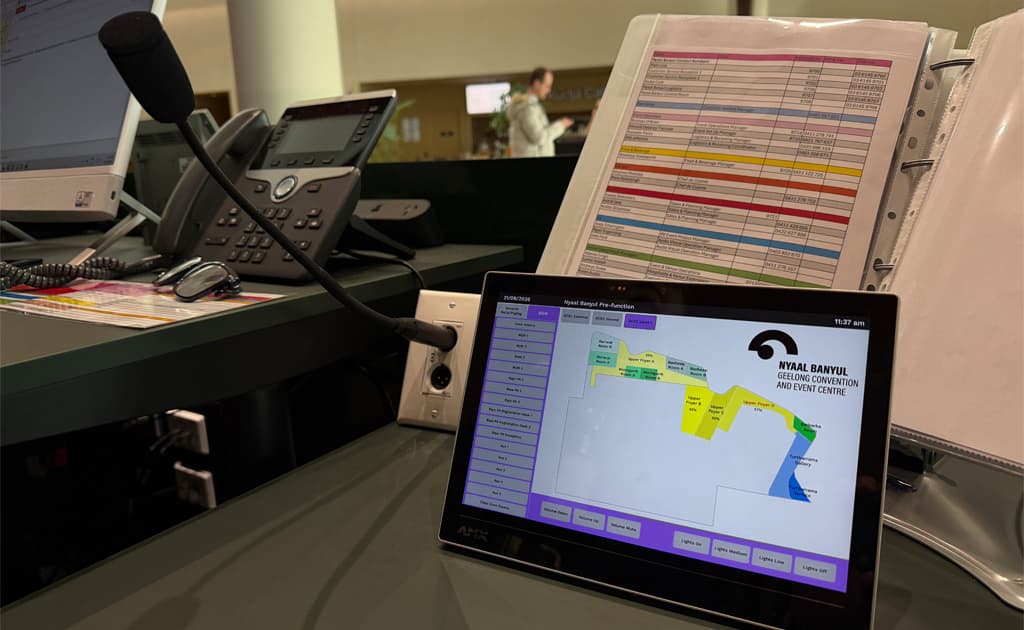
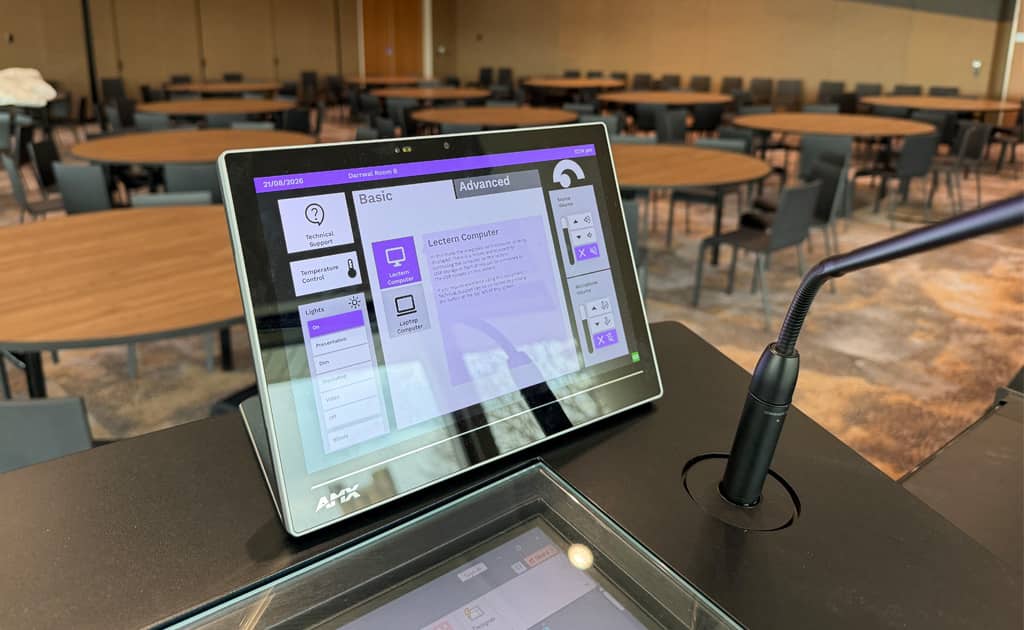
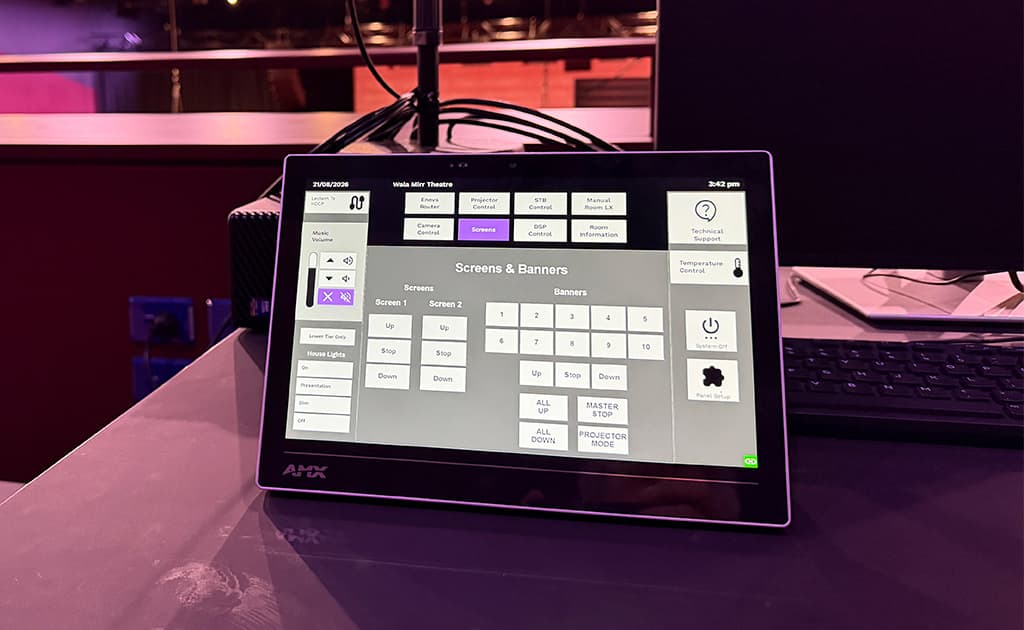
AMX Muse with Varia touch panels handle control.
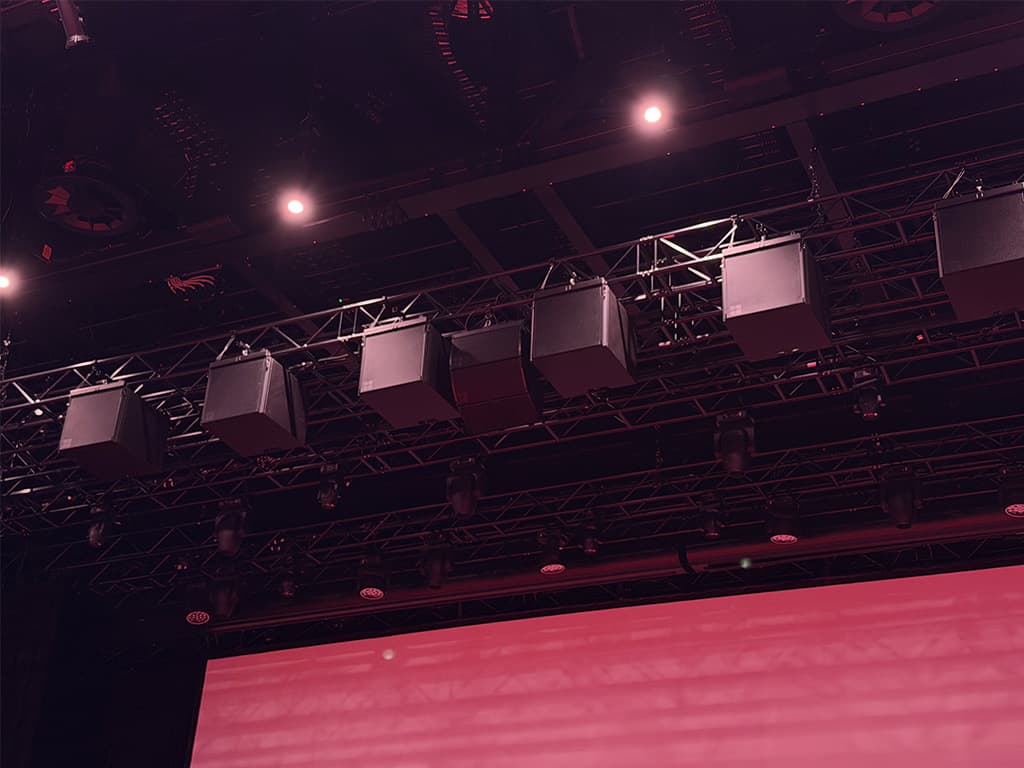
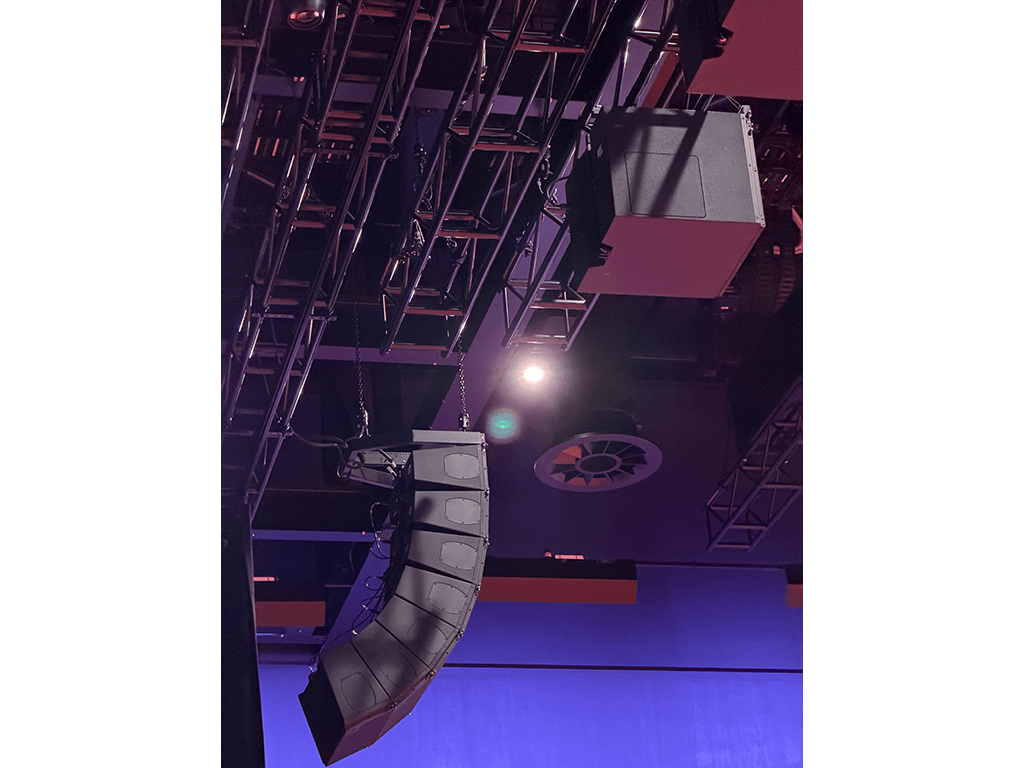
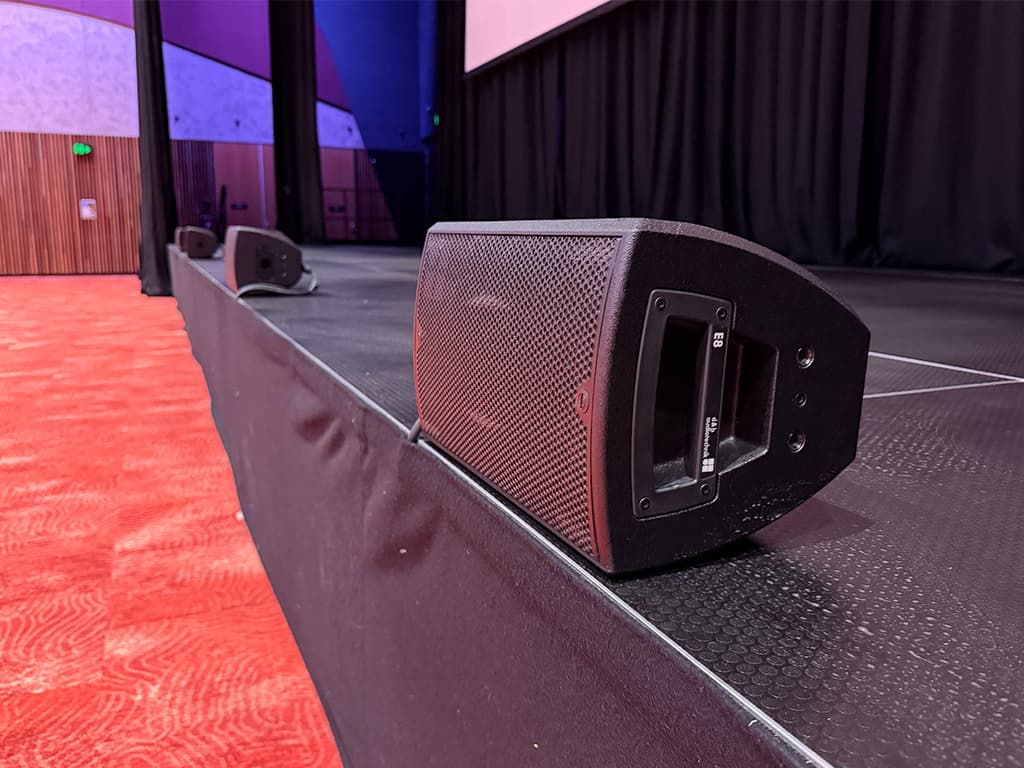
Wala Mirr Theatre’s d&b PA solution features V Series L/R seven-element arrays, a three-enclosure A Series centre array, a horizontal array of six flown V-Subs, V10P balcony delays, and E8 front fills.
STAGE ON DEMAND
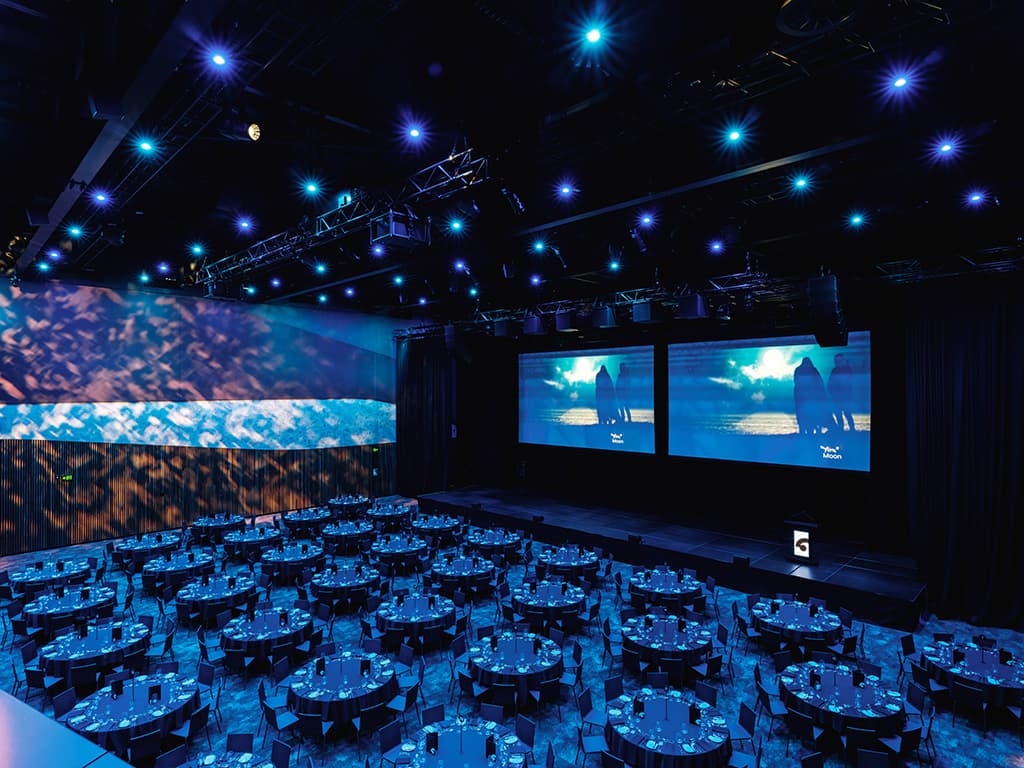
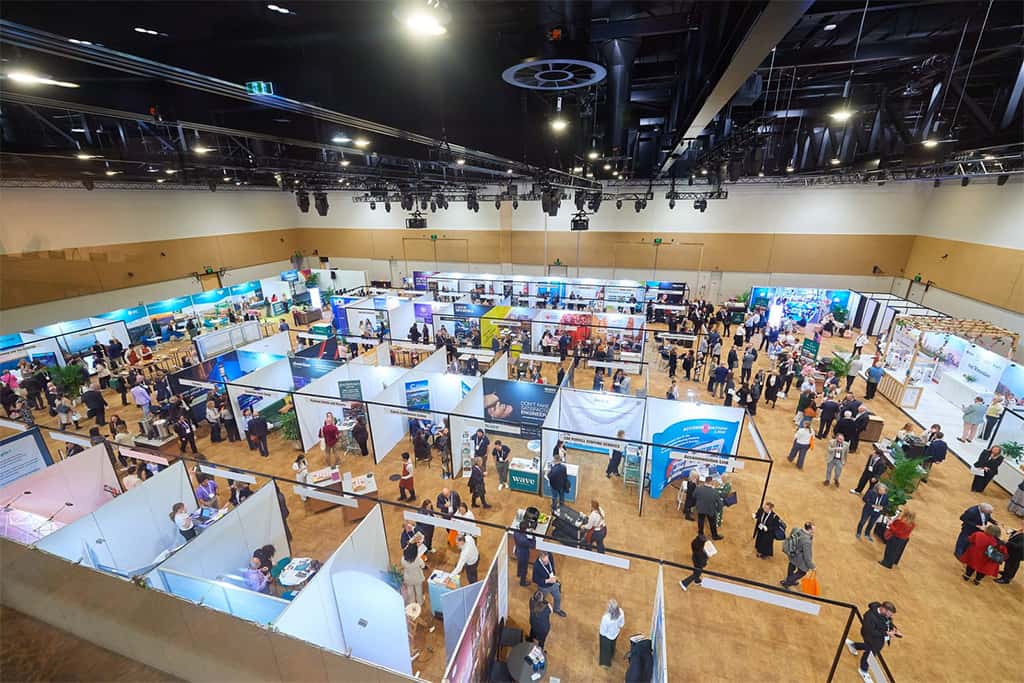
Above the Delama event space, the ceiling infrastructure sits on 400mm box truss driven by Moveket motors under a Kesk controller supplied by The P.A. People. Every motor carries load cells and encoders. “You can actively balance your lift and reconfigure your loading live in the room based on feedback,” Walker says. “It will return exactly to the right spot and tell you exactly what weight is sitting on each.”
The practical effect is dramatic. Perimeter draping of the entire hall takes roughly two hours at floor level (rather than all day with a scissor lift). Projection screens – including a 50-foot Stumpfl unit that travels between spaces – are flown, blended and ready in under two hours. Walker has yet to bring a boom or scissor lift into the Wala Mirr Theatre and has needed plant only once across more than two dozen events in the events hall. “Everything comes down. We reconfigure all of the patch, all of the data, all of the power. It all reticulates down to the truss.”
Energy-chain management keeps data, power and control cables organised as the trusses move. The same philosophy extends to the floor: pits every three by three metres (or three by six in some zones) contain six Cat6A outlets (with runs capped at 80m), three pairs each of multi-mode and single-mode fibre, and substantial three-phase power. “The cable run was only a metre or so, because we can lift the carpet,” Walker notes of a last-minute photo wall that needed three circuits. “All of the pits are in the floor on 25 to 30mm steel plate so you can drive plant, trucks, whatever in here.”
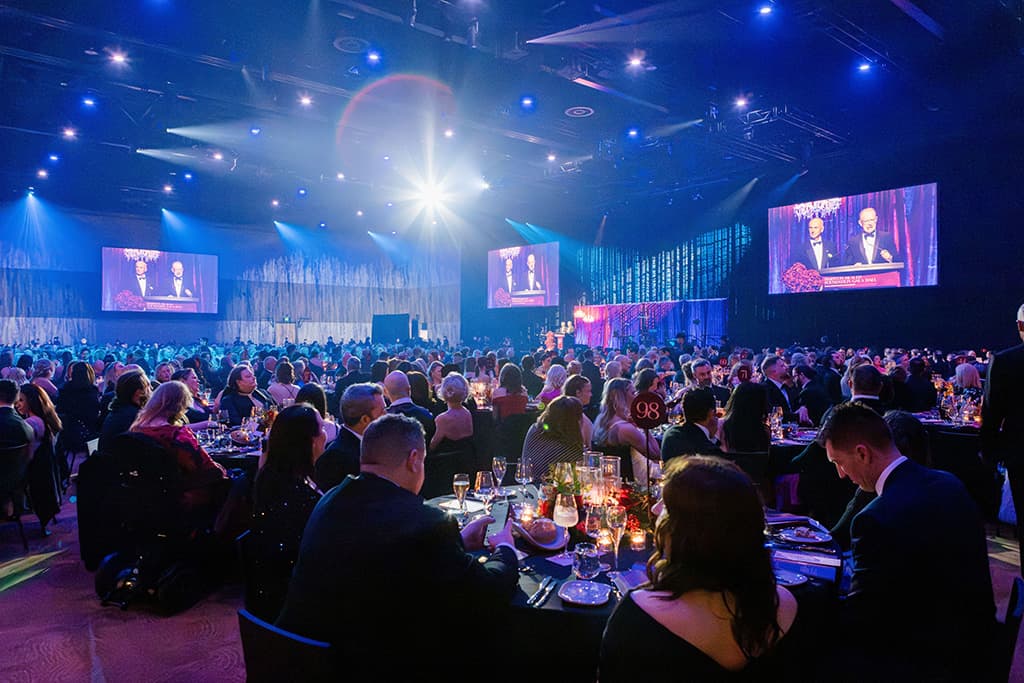
Speaking of ‘things that go up and down’, acoustic blinds, again, supplied by The P.A. People, drop to convert the 1000-seat theatre into a 600-seat or smaller space, both visually and sonically, so an event never feels lost in a cavern.
“”
We built an international-standard venue in Geelong because Geelong deserves to see international content
SIGNAL WITHOUT FRICTION
Media transport deliberately separates local low-latency paths from building-wide distribution. Local content – presenter laptop to foldback and main screens – travels point-to-point over the AMX Enova DGX fibre matrix. “There is very little tolerance for latency in a system when the presenter is in the same room as the screen content,” Walker explains. “Point-to-point allowed the lowest possible latency for localised content. At least back in 2022 when things were specified things. Nowadays, many AVoIP platforms are doing a lot better with sub-frame latency.”
For routing between rooms, digital signage and portable displays, AMX SVSI 4K IPTV encoders sit on the corporate network. Any Cat6A point can become a decode location. Dante carries audio throughout, feeding Q-SYS cores and the Allen & Heath dLive S7000 consoles (FOH and monitors) chosen for their familiar workflow among local crews. Balanced analogue is also available in the pits for simple analogue needs.
Control is mediated by AMX Muse with Varia touch panels. Storyboards developed from Melbourne’s mature system were adapted – “Geelongified”, as SKS Project Manager, Patrick Jinks describes it – so the interface remains consistent across rooms even when the underlying technology differs. Modules can be restarted independently without affecting the rest of the building. Background music, paging, Bluetooth inputs and Dante AVIO devices are all selectable from key touchpoints (such as reception or registration desks) where the Varia units display an easy-to-comprehend architectural plan-view of the venue.
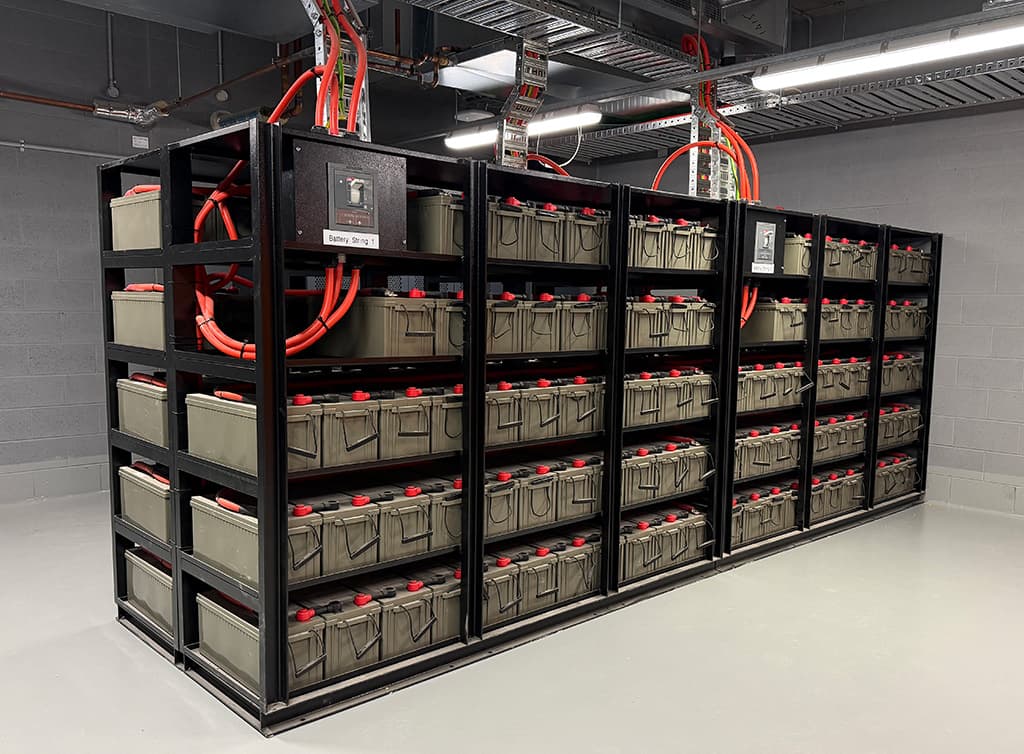
This is what 10 minutes of full-venue battery backup looks like. Ten minutes is long enough for the diesel generators to kick in and recharge the batteries. All power, in good times and bad, runs through the battery, ensuring pristine conditioned power.
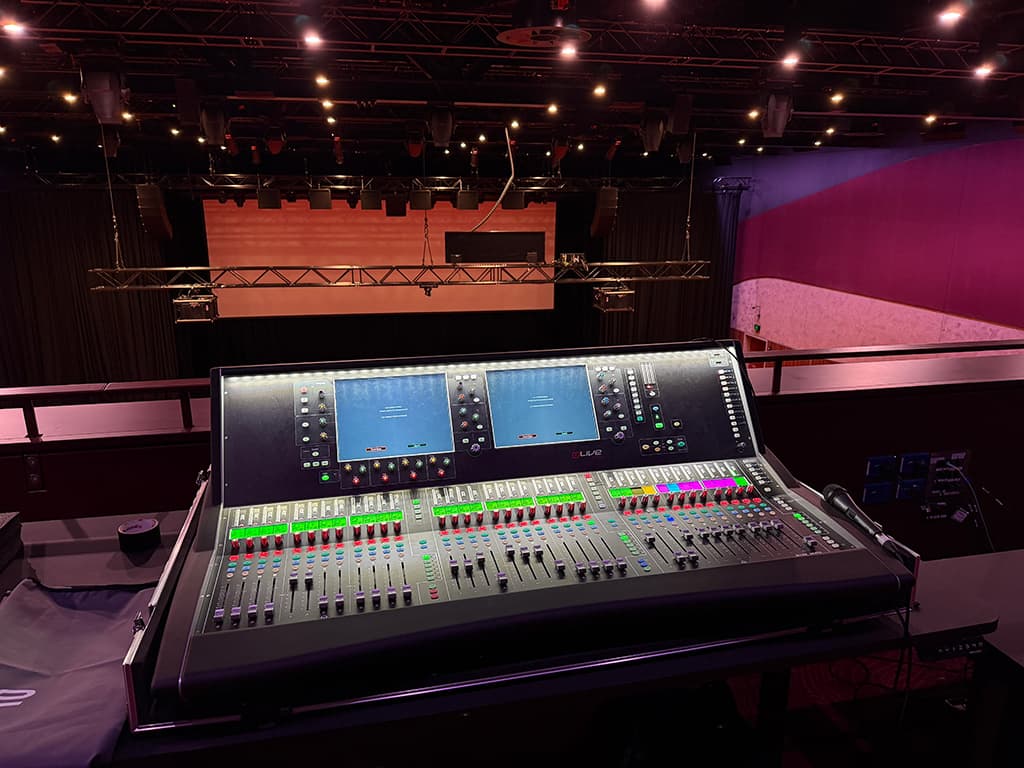
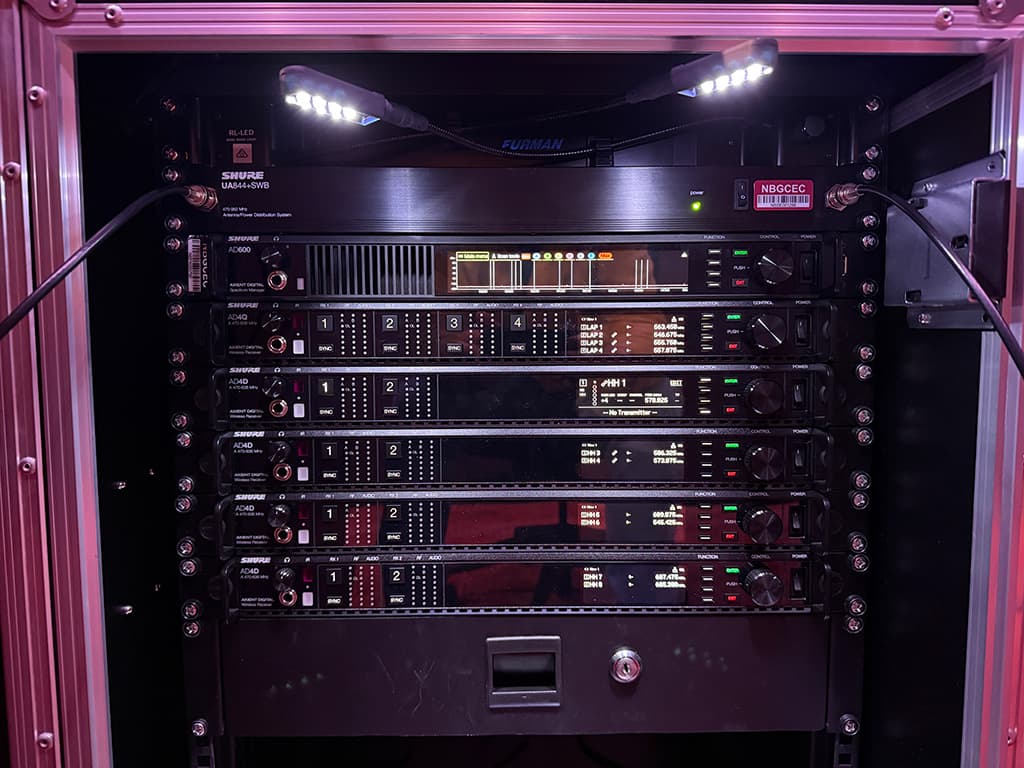
The Wala Mirr AV package includes Allen & Heath D-Live mix systems and Shure Axient wireless.
BROADCAST READY
A parallel high-bandwidth layer handles outside broadcast requirements. Riedel MediorNet creates a self-healing 12G-SDI fabric. Fibre runs to every pit and a dedicated 24-core single-mode feed reaches the satellite truck position with uninterrupted views over Corio Bay and the northern skies, designed in collaboration with key stakeholder, NEP. Cameras can inject SDI via AJA converters or a local Riedel MicroN UHD frame; once on the ring the signals appear at the OB patch. Cross-conversion with the AMX DGX Enova system allows selective incorporation of broadcast sources into the house vision system.
Comms follow the same thorough approach. Riedel Bolero provides full internal and external coverage with 36 beltpacks; hardwired Artist/PunQtum sits in the theatre. Production teams and clients stay connected whether they are on stage, in the loading dock or walking the pre-function space.
AN ECOSYSTEM IN THE MAKING
The technical choices are not ends in themselves. They serve a broader ambition: to create capacity and capability in Geelong rather than simply import it from Melbourne. “We’re building a whole capability in this city,” Michael Walker says. Local technicians who previously travelled to Melbourne for work now operate systems they already recognise. Events that once hit capacity ceilings or were priced out of larger venues can scale. International and national content can sit alongside community galas and careers expos without the infrastructure becoming the limiting factor.
“We built an international-standard venue in Geelong because Geelong deserves to experience international content,” Walker concludes. The systems – d&b loudspeakers that changes configuration at the push of a button, motorised infrastructure that works at floor level, high-bandwidth media transport that stays invisible until needed, and broadcast-grade connectivity that is simply there – make that claim practical rather than aspirational. The result is a venue that can say ‘yes’ more often, at a cost the regional market can sustain, while quietly raising the technical floor for everyone who works there.
Nyall Bunyal: mcec.com.au/nyaal-banyul-geelong-convention-and-event-centre
SKS Technologies: sks.com.au
NAS (d&b Audiotechnik): nas.solutions
The P.A. People: papeople.com.au
Riedel: riedel.net
MadisonAV (AMX): madisonav.com.au
TAG (Q-SYS, Allen & Heath): tag.com.au
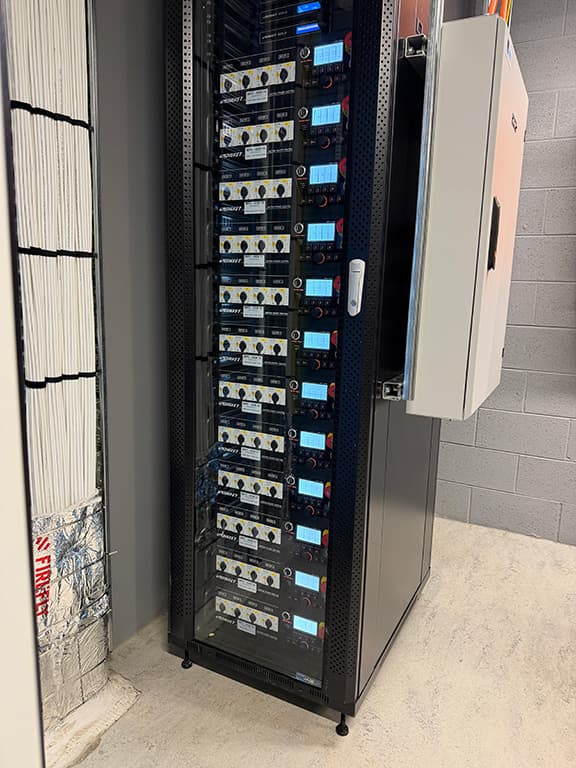
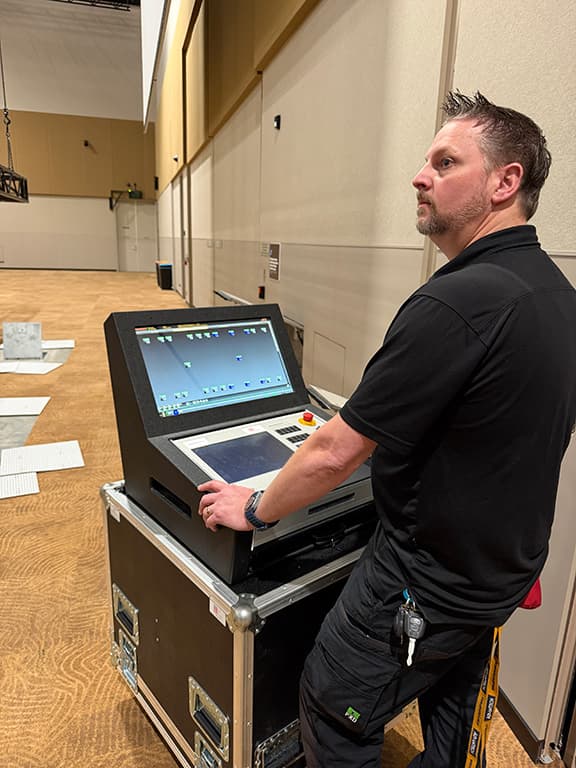
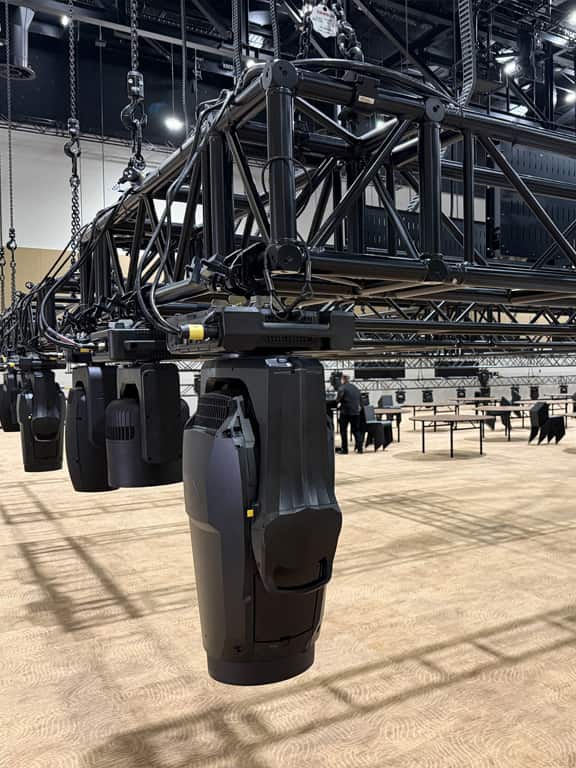
Above the Delama event space, the ceiling infrastructure sits on 400mm box truss driven by Moveket motors under a Kesk controller supplied by The P.A. People.


RESPONSES