
AV Case Study: Sydney Opera House Auri Hearing Augmentation
The Sydney Opera House introduces Auri's Auracast assistive listening system to its theatres. This is more than an AV upgrade.

31 August 2026
Text:/ Richard Neale
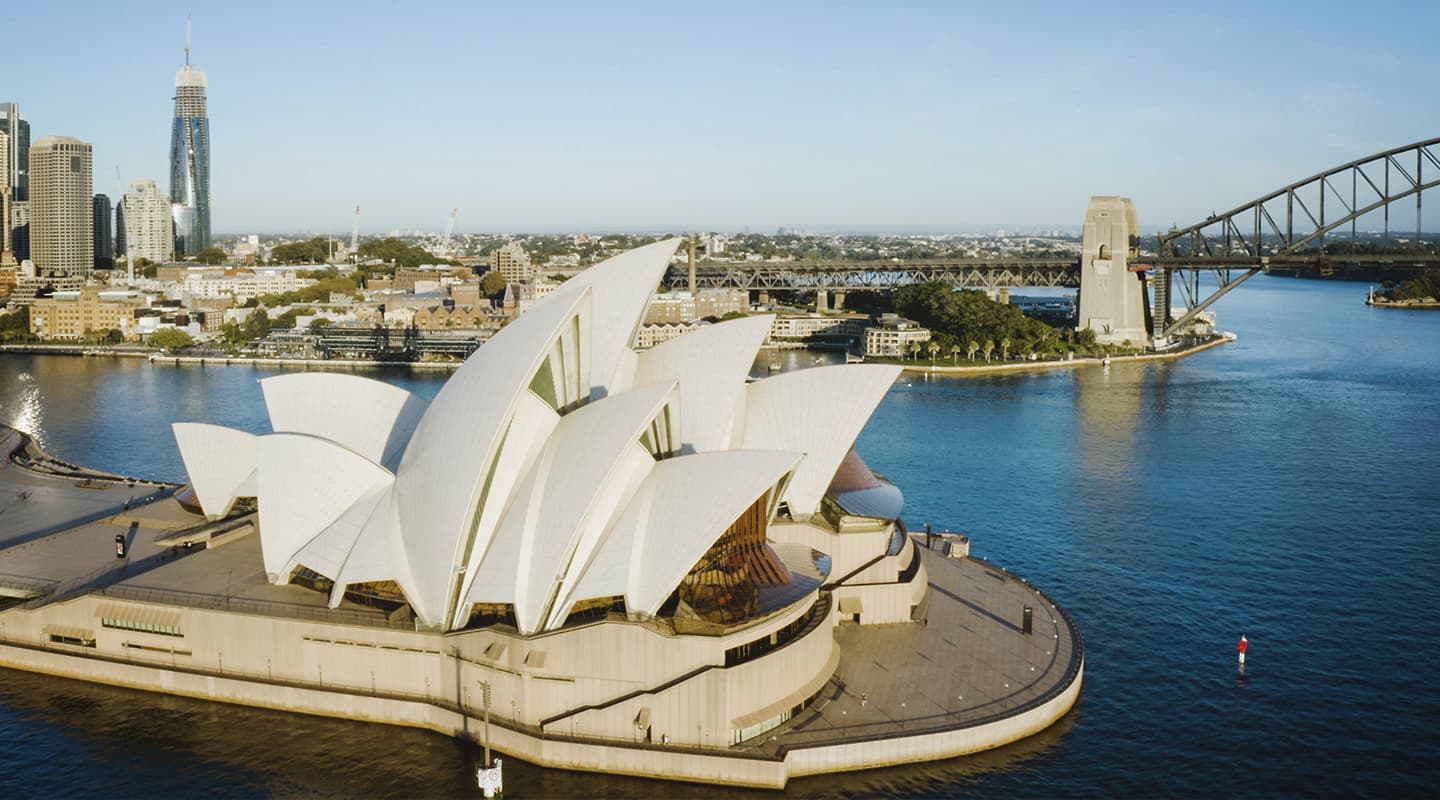
The Sydney Opera House is more than an architectural triumph perched majestically on Sydney harbour. It’s Australia’s leading tourist destination, one of the world’s busiest performing arts centres, and it is inscribed on the UNESCO World Heritage List. It builds on traditions of gathering and storytelling that were established over millennia by the Gadigal people – the traditional custodians of Tubowgule (Bennelong Point), the land on which the Opera House stands.
In its ambition to be Everyone’s House, the Opera House is continuing to evolve alongside the community it was built to serve. Inclusivity is a core value in its organisational strategy, expressed as: “We respect and welcome everyone. People feel a sense of belonging here.”
ACCESS FOR PEOPLE WITH HEARING LOSS
People consistently report that sound is an extremely important sense when it comes to experiencing live music and performance. To support the Opera House in its ambition to be Everyone’s House, it’s essential that it provides barrier-free access for the nearly 20% of the world’s population that lives with some form of hearing loss (World Health Organisation data).
Dr Pádraig Kitterick (Head of Audiological Science at Sydney’s National Acoustic Laboratories) provides some perspective: “One of the things about hearing loss and hearing difficulties is not just that they make it hard for people to hear, it makes it hard for them to take part in everyday activities that most of us take for granted. It’s very common for people with hearing difficulties to avoid participating in activities, to just stay at home – which is a real shame for people who would otherwise love to come to see a live performance.”
How does a leading global cultural institution like the Opera House respond?
In a word: Auracast – a Bluetooth broadcast audio technology allowing compatible hearing aids, cochlear implants and Auracast-enabled receivers/headphones to receive a shared audio signal.
“We want to provide barrier-free access – to make the building and the experiences we offer accessible to all,” explains Janelle Ryan, Senior Manager Impact Programs and Operations, Sydney Opera House. “In the past, our hearing-impaired patrons have used older technologies such as hearing loops and FM systems to access the audio in our venues. Our new Auracast systems change all that. Auracast provides consistent, high-quality audio to all the seats in a venue. It means that people with hearing disability can experience the vast array of performances at the House: opera, symphonies, spoken word, modern music… even a ’70s disco cabaret. Every performance space at the Sydney Opera House is now equipped with Auracast.”
RHAPSODY IN BLUE(TOOTH)
Auracast is upending people’s understanding of hearing augmentation technology. [For an introduction to Auracast, check out the AV.technology primer – Ed.]
Pádraig Kitterick: “Older hearing augmentation technologies have quite big limitations. You might need to have or to borrow a proprietary device to access the signal. You might be restricted as to where you can sit in a venue. The sound quality might be quite poor.
“Auracast is a fundamental change in hearing assistive technology. First, it’s widely accessible. You can access the Auracast signal with a hearing aid, cochlear implant, or Auracast-enabled earbuds or headphones. The technology goes beyond hearing aids or devices. Second, it’s for anywhere. It can fill a large space, and there are no restrictions as to where you can receive the signal. Third, it’s a huge step forward in sound quality. It brings assistive technology into the modern age.”
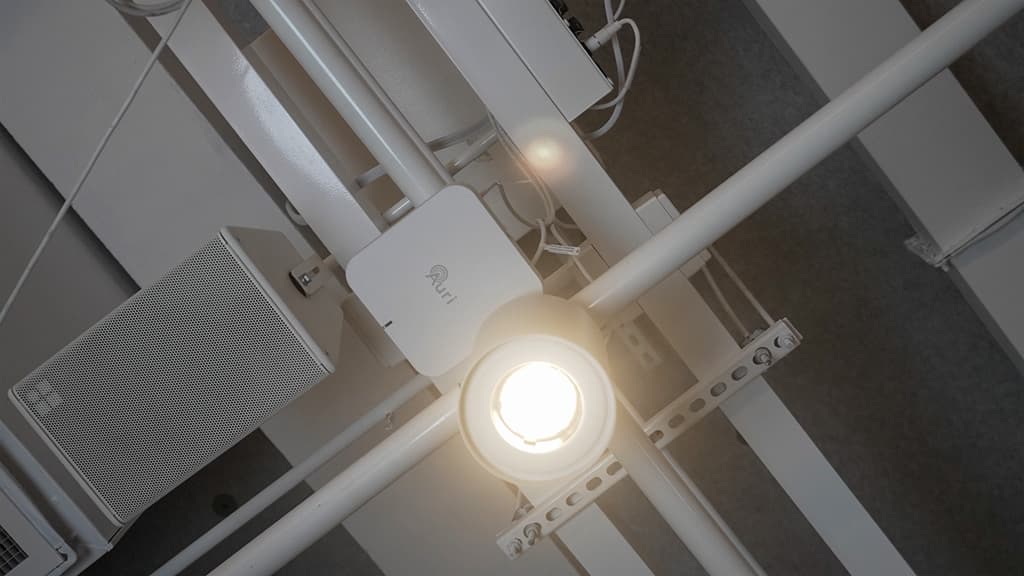
The Opera House chose the Auri family of products to bring the benefits of Auracast to its patrons. Auri is a complete Auracast hearing augmentation solution, developed by ListenTechnologies and Ampetronic, that transmits venue audio wirelessly to compatible hearing aids, cochlear implants and receivers, with Jands providing distribution and support in Australia.
Deploying Auri to the Opera House’s performance venues presented little challenge to the building’s technical team.
“We have now rolled out the Auri system across our seven indoor performance venues,” says Nicola Wynne, Project Manager, Opera House. “It was really simple to install.
“The Opera House is a 50-year old building with local, state and world heritage listings recognising its unique architecture and cultural importance. The Auri system was as easy to install as a WiFi access point. We didn’t have to remove the carpets or make compromises to the building’s fabric. We got it done in a day. The sound quality is great, and it was very simple to set up.”
“”
We want to provide barrier-free access – to make the building and the experiences we offer accessible to all
HOW CAN I LISTEN?
Auracast technology was developed in partnership with the world’s leading hearing appliance manufacturers, alongside consumer electronics companies. Auracast receiver capability is already included in many hearing aids and cochlear implants that have been supplied to Australian users and the inclusion rate is increasing. (Contrast this with the declining rate of inclusion of telecoils – necessary to listen to an induction hearing loop.) Many headphones, wireless earbuds and Android devices are now Auracast-enabled.
But not all hearing aid wearers have access to Auracast today. And not all people with hearing impairment wear hearing aids.
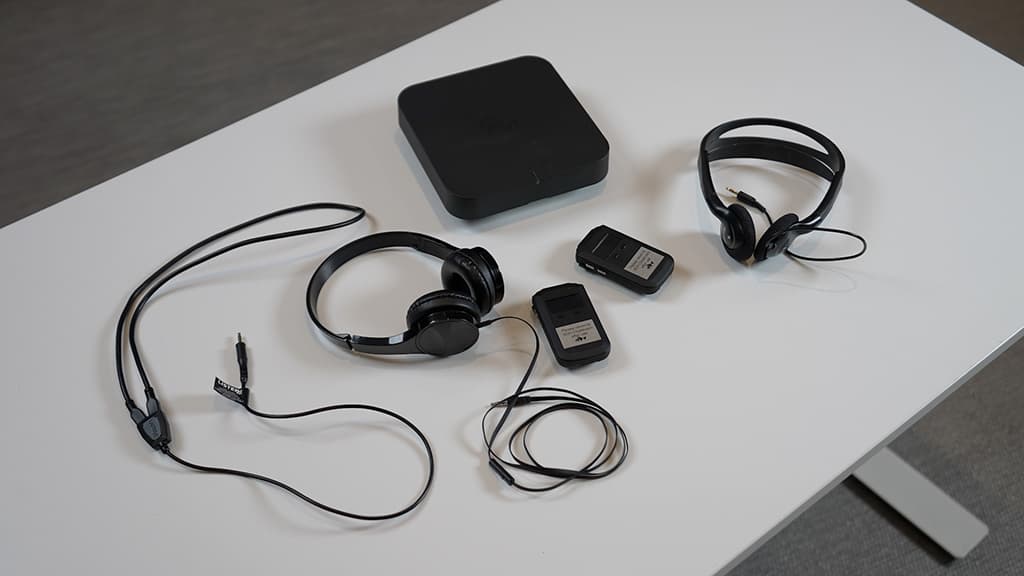
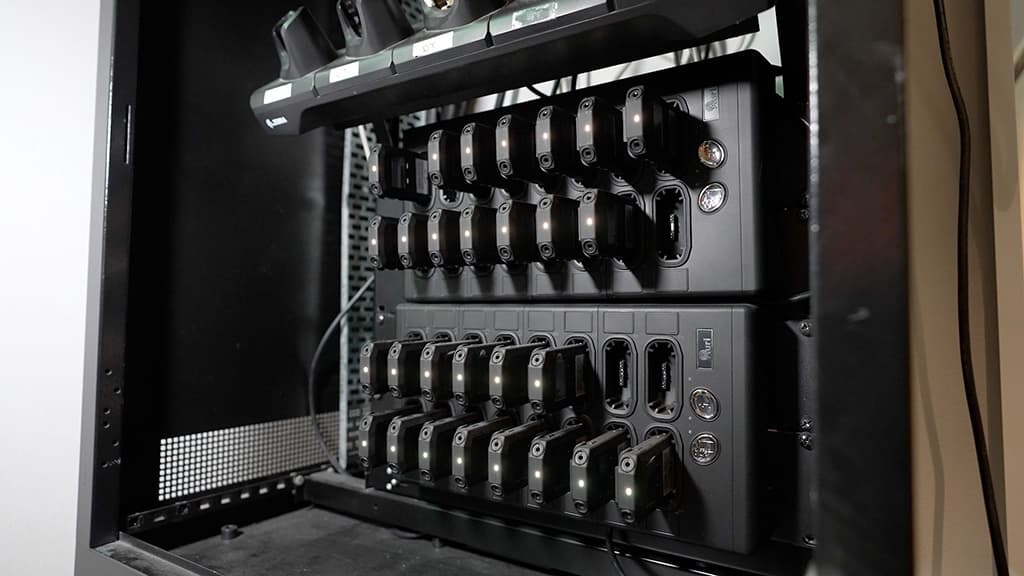
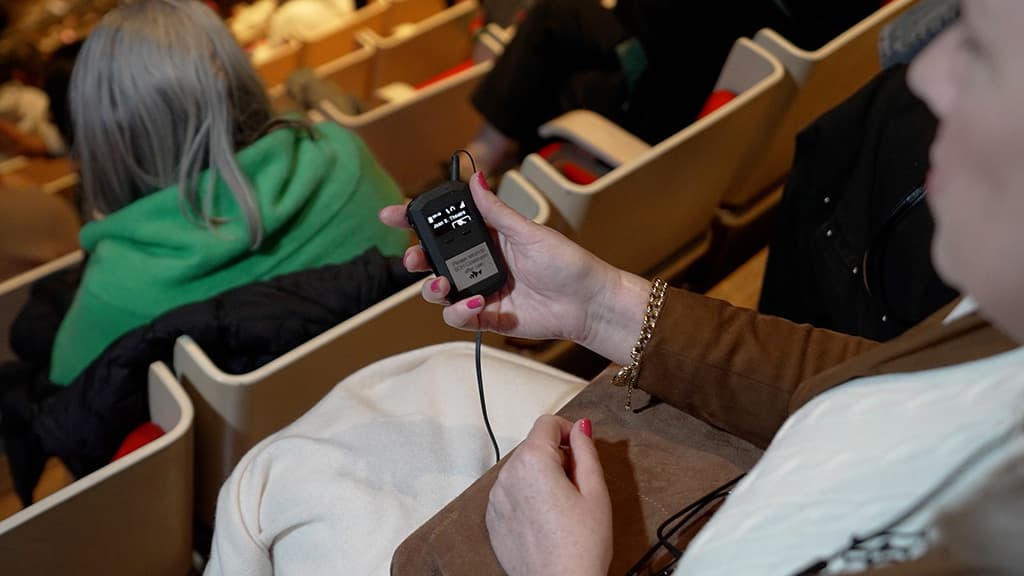
To meet the AS1428.5 (Design for access and mobility, Part 5: Communication for people who are deaf or hearing impaired) requirements, the Opera House has Auri RX1 receivers available for loan outside each venue. The Auri RX1 receivers can drive wired headphones, earbuds or a neck loop (for people whose hearing aids have a Telecoil).
Andrew Attard, Business Development Manager for Hearing Augmentation at Jands, explains: “The Auri RX1 receivers are for those who don’t have an Auracast-compliant device in their ears. So if somebody has an old-school Telecoil, they can still make use of the technology by using a neck loop around their neck and this will connect to their Telecoil hearing aid.”
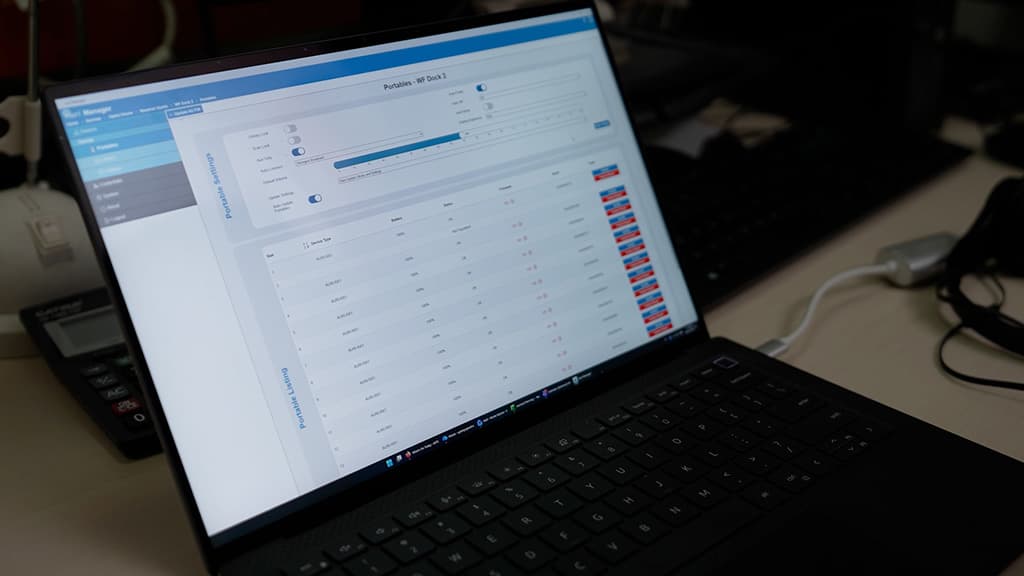
The Auri RX1 receivers relax in charging cradles between performances. While in their cradles, receiver health is monitored, and firmware updates can be deployed in bulk from the central management console.
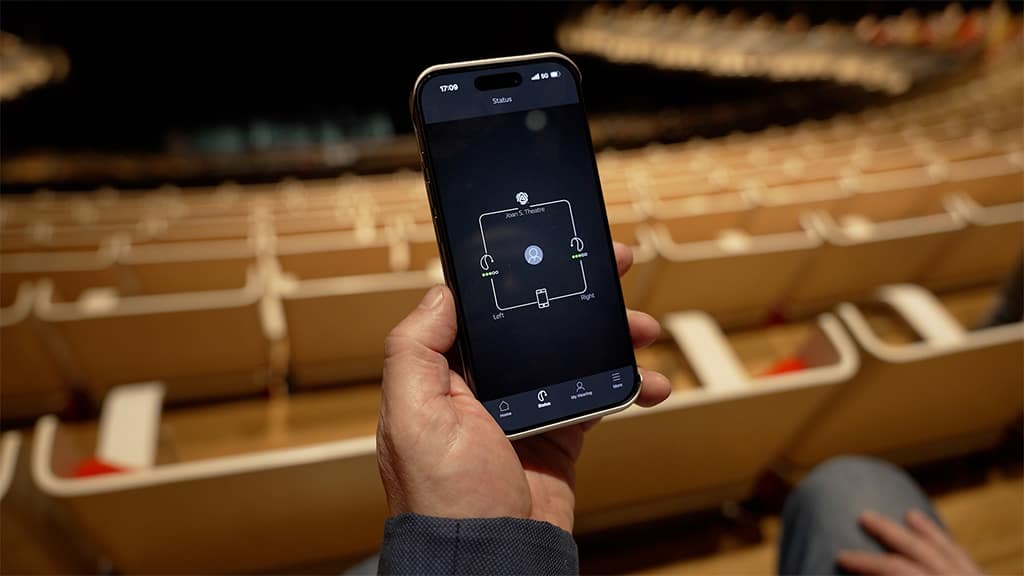
Andrew continues: “However, the point of Auracast technology is that people can use their own Auracast-compliant devices to connect to streams, without having to connect to an external receiver.”
THE SHOW MUST GO ON
For AV.technology’s visit, the Opera House invited two people with hearing loss to experience the newly-installed Auri Auracast systems.
Chris Pappas enjoyed the glitz, glamour and Parisian charm of Franz Lehár’s The Merry Widow in the Opera House’s iconic Joan Sutherland Theatre.
Chris’s reaction upon leaving the performance? “Brilliant. Just wow. It was amazing to experience a show like this with absolute, crystal clarity. Mind boggling. The Auracast system connected seamlessly to my hearing aids, and filled in all the gaps where my hearing is lacking.”
Brendan Lonergan (President of Hearing Matters Australia, a support and advocacy group working with and for people with hearing loss) watched Marcia Hines in a groovy coming-of-age journey in Velvet Inferno, performed in the Opera House’s intimate Studio.
Brendan appreciated that the Auri Auracast system made it possible to understand the vocal performances. “Auracast pushed the vocal to the forefront for me, so I could hear and understand more clearly than I normally can. That really makes a difference – especially with a quality vocalist like Marcia Hines.”
BROAD APPEAL
“One of the things that makes Auri unique is its dual-radio architecture, allowing a single Auri TX2N transmitter to deliver up to two independent stereo Auracast broadcasts simultaneously, says Andrew Attard. “For example, one radio can provide a 16kHz or 24kHz stereo broadcast, ensuring compatibility with Auracast-enabled hearing aids and other assistive listening devices. At the same time, the second radio can deliver a 48kHz stereo broadcast, providing a higher-fidelity listening experience for neurodiverse visitors or anyone who simply wants to enjoy the performance through compatible headphones or earbuds.
This dual-radio architecture allows Auri to provide value beyond purely hearing-assistive applications.
“It means that from one Auri transmitter, a venue can deliver two stereo broadcasts tailored to different audiences and listening requirements,” continues Andrew. “The same infrastructure can therefore serve both traditional accessibility needs and a much broader personal-listening experience, making Auri far more than simply a replacement for conventional hearing augmentation.”
We asked Chris and Brendan what they’d say to other venues thinking about Auri Auracast for hearing assistance.
Chris: “Auracast is unbelievable. It’s so easy to activate. It’s no different to activating any other Bluetooth connection. And it just does it; it just works. I would absolutely invest in this technology because it makes the lives of people like me a lot easier. We get to enjoy your facility a lot better when we’re not struggling to hear.”
Brendan: “Run and grab it as fast as you can because it’s incredibly useful for people who’ve got hearing loss. It makes a massive difference. But it’s also useful for people who don’t have hearing loss but who want to enjoy clearer access to the sound.”
The Hard of Hearing community is speaking out for Auracast.
The Sydney Opera House has heard the call, and deployed the Auri solution.
Jands (Auri): jands.com.au






RESPONSES