
AV Case Study: The Edge, Federation Square
An assistive listening upgrade sees Williams AV’s Auracast solution, Infinium, taking to the stage.

23 October 2026
Text:/ Graeme Hague
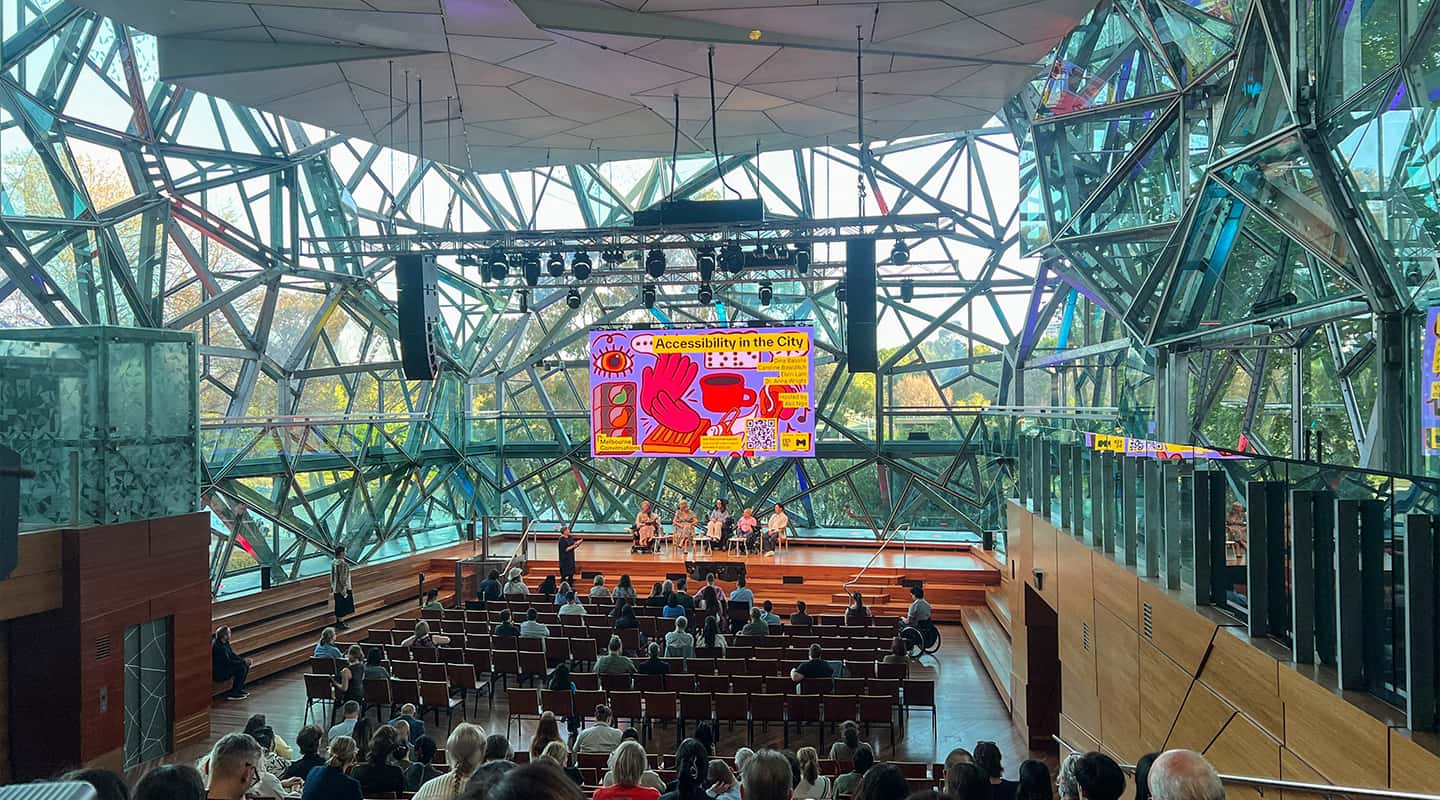
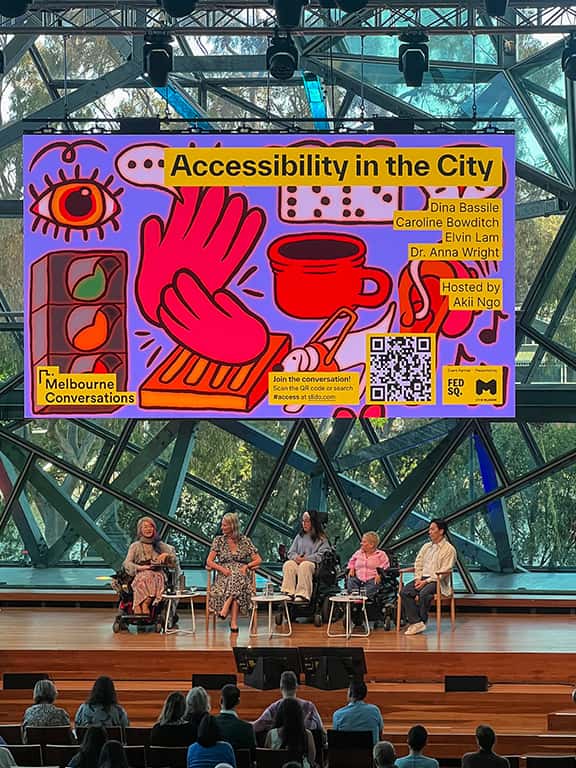
The Edge is a modern amphitheatre part of the Federation Square precinct. The majority of the auditorium walls are tall glass panels that provide fantastic views of the river and Melbourne skyline. That would normally make sound engineers stop reading right now, but a lot of clever thought went into the acoustic design of the space. It plays host to all manner of events, including live music from opposite ends of the spectrum. One night there will be a DJ spinning some grooves, and the next it can be a chamber orchestra.
It can seat up to 450 people in a combination of raked auditorium-style seating plus a flat floor area in front of the stage. No surprise, it’s a very versatile space, although a common theme is contemporary arts and culture. It’s also very busy, with a huge turnover of visitors annually, which means the AV facilities need to be reliable and up to date with the latest technologies. Recently, the assistive listening system was failing to assist anyone and a replacement was needed.
OUT OF THE LOOP
The previous hard-of-hearing system, as it was known when first installed and before assistive listening became the preferred term, was the original loop buried in the concrete base. For the uninitiated, a large venue with an abundance of structural steel like The Edge needs a loop amplifier powerful enough to cater for Led Zeppelin at Madison Square Garden. The loop creates an RF field of audio that could be picked up by hearing aids with a telecoil setting. A hearing loop traditionally has its advantages but even coverage isn’t one of them.
So Mitchell Stace, who is the Production Manager for the Melbourne Arts Precinct (not just The Edge), was in some ways glad to discover the hearing loops in the flooring were broken, couldn’t be repaired or even accessed, and replacing the system like-for-like wasn’t an option. It needed a completely new approach.
Plus, as Mitch explains, “Assistive listening is a totally different offering now. It’s not just for people with hearing difficulties wanting audio reinforcement. We have visitors of all ages and backgrounds, and so many of them have Bluetooth headphones and smartphones and apps, and they want to enhance the experience of whatever is being performed or exhibited in The Edge. They want to tap into any audio that’s there.”
It means that many visitors look to personalise their interaction with the show through their own headphones, and a lot of concerts and exhibitions are building that interaction into their productions. Also, you have school classes and guided tours where a presenter needs to be heard by a large group of people while they’re surrounded by the general public and ambient noise. Previously, any venue had to own some significant hard-of-hearing and/or guided tour equipment and technology to provide this. That involved handing out neatly coiled headsets and receivers and being given back a sticky, tangled mess with the battery missing.
There had to be a better way, and of course there is.
“”
Assistive listening is a totally different offering now. It’s not just for people with hearing difficulties wanting audio reinforcement
CARRYING AURA
Mitch admits to briefly flirting with an infra-red system, which contradicts the rationale of the smartphone app solution, but due diligence for all the options is always important. Aside from the logistics of daily giving out an unknown number of receivers and headphones, and keeping track of them, it was discovered that the large amount of glass windows and sunlight could adversely affect the IR transmission. Scratch that idea.
Next, Mitch had a chat with Bryce Mosely, Victorian Account Manager, Integrated Solutions, for Amber Technology, to hear what he suggested. Apart from being an expert and highly credentialed in these technologies, plus he’s an all-round nice bloke – Bryce used to work at The Edge. He knew the problem exactly.
The solution ended up being very simple, cost-effective and easy to install.
A Williams AV Infinium Auracast transmitter was connected via Dante to The Edge’s audio system and discreetly installed inside the auditorium, and instantly assistive listening is well and truly assisting anyone who asks for it. Now, it’s a matter of telling everyone to download a free app, put on their headphones and connect to The Edge system, and vast majority of the people will be good to go. For the rest, The Edge has purchased the requisite number of receivers and headphone sets, but nothing like the numbers you’d normally need to cover everyone. As a bonus, the Infinium transmitter is so small and unobtrusive that the Heritage Listed gremlins didn’t stir at all.
MEETING DEMAND
Mitch has noticed an upward trend in demand for assistive listening programming. When visitors see that the Auracast network is in-house, they want to know what content is available. The upgrade is so successful that Mitch is considering expanding it to the outside areas, although he’s aware the RF interference could be a challenge. That cost-effectiveness meant he purchased the new equipment in his maintenance budget. “It wasn’t even capital expenditure,” he says, plainly eyeing off other stuff to buy, probably window cleaner. “The team at Amber Technology are great at coming up with the best solutions, and they never recommend equipment you don’t really need. It’s always the best fit for the job, nothing else. You can really appreciate that.”
The Edge continues to offer the latest in art, music, culture and technology thanks to Williams AV and Amber Technology. Drop by and see what’s happening. And hear it too.
Amber Technology: www.ambertech.com.au







RESPONSES