
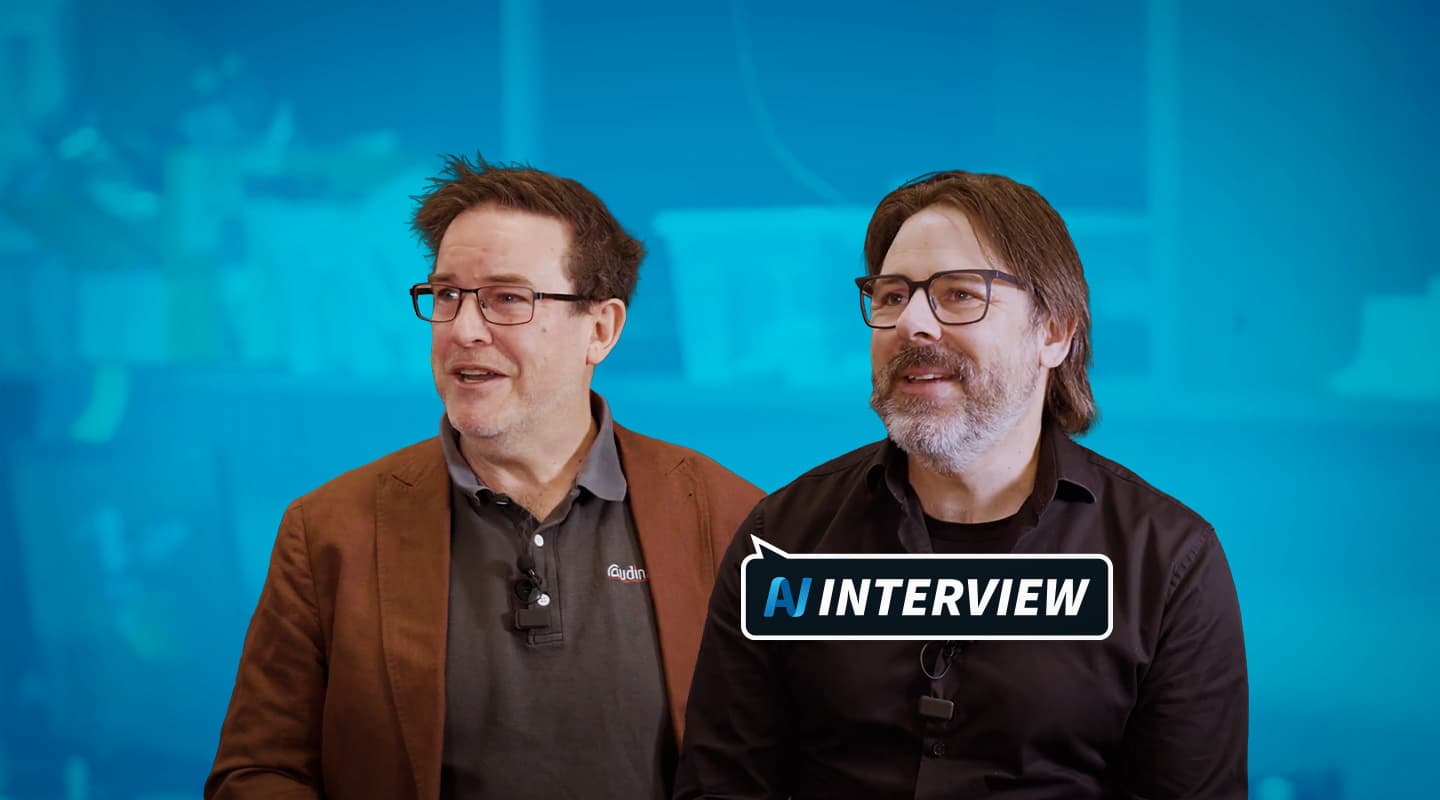
AV Interview: Aidan Williams & Chris Ware, Audinate
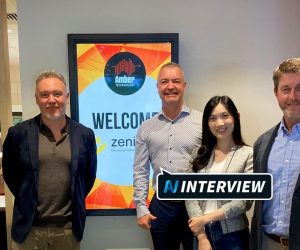
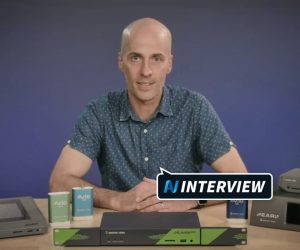
Audinate celebrates 20 years of Dante. SVP, Product Development, Chris Ware, joins CEO and founder, Aidan Williams, to look back (and forward) at what the Australian success story has achieved.

20 March 2026
Interview:/ Christopher Holder
Twenty years is a long time in technology, especially in an industry as conservative and hands-on as pro AV. Yet here we are: Audinate, the Sydney-born company that turned a simple frustration – too many cables, too many proprietary boxes, too much swearing at IP addresses – into Dante, the nearest thing the AV world has to an open, universal plumbing standard.
AV.technology sat down separately with Aidan Williams, founder and CEO, and Chris Ware, one of the very first senior hires and now SVP, Product Development. Both are quintessential Aussies: pragmatic, understated, and quietly proud of what they’ve built. What emerges is less a corporate victory lap and more a slow-burn engineering story – one that started in garages and church gigs, survived the long tail of manufacturer adoption, and now quietly underpins stadium tours, corporate fitouts, houses of worship, and broadcast trucks the world over.
THE SPARK: NETWORKING MEETS MUSIC
Christopher Holder: Aidan, rewind to the ’90s. You’re an electrical engineer who played trumpet and recorded at home. What was the real trigger for Dante?
Aidan Williams: I grew up in the country pulling tractors apart to understand them. Electrical stuff was magic – inscrutable. So I did engineering to demystify it. Music was always there: school orchestra, uni bands, church services, home recording. By the late ’90s I was deep in IT at Motorola Labs, working on plug-and-play home networking. But the frustration hit when I was gigging and recording. Inside every keyboard, mixer, interface – it’s all digital. Yet we were converting to analogue just to run cables, then back to digital into the computer. FireWire was the hot new thing then – this beautiful little box with analogue ins/outs and a FireWire port to the Mac. State of the art. But drag it to another venue, wrong socket, nothing works. To me, it screamed ‘networking problem’.
Plug-and-play networking was my day job: automatic addressing, no magic numbers. Why couldn’t audio do the same? No IP fiddling, no MAC conflicts, just plug in and it discovers everything. That was the germ. The signal is digital end-to-end – the cabling is the only analogue bit left. Solve that with proper networking and you remove most of the pain.
Christopher Holder: Chris, you came from studios and telecoms. When did you first see the light?
Chris Ware: I was a late-teen studio rat at Damien Gerard Studios in Sydney. I loved recording, loved live sound, but wanted to know how the gear actually worked. That led to electrical engineering, then telecoms at Motorola. Aidan and I crossed paths there – didn’t work directly together but talked tech constantly. When Motorola closed the Sydney lab it was a blessing in disguise. Aidan had already started down the Dante path at NICTA; I joined in 2007 when he needed someone who could take prototypes and make them production-ready. From there it’s been a ride.
LONG ROAD: CONVINCING THE PONYTAILS
Christopher Holder: Those early days must have felt like Alexander Graham Bell with a telephone and no subscribers.
Aidan Williams: Exactly. We knew networking could do low-latency, reliable audio, but the industry didn’t. Gigabit Ethernet timing was perfect – suddenly you had headroom. We exploited real Ethernet behaviour for sync instead of forcing TDM-like structures onto a packet network. CobraNet and EtherSound had already taken the punches, proving it was possible. We just made it scale and made it easy.
Chris Ware: We were very focussed on live sound in those early days. People found it hard to wrap their heads around the idea of depending on a 15-cent RJ45 network connector for their million-dollar show. In response we built primary/secondary redundancy on separate networks, used standard spanning tree for fault tolerance. We helped Clair Global design the 2010 Winter Olympics network – if it failed, it failed gracefully. The world was watching and that gave confidence.
The breakthrough connection was Bruce Jackson and Dave McGrath at Dolby. Bruce – front-of-house for Springsteen, Streisand, Elvis – had golden ears, the respect of the industry and saw the potential immediately. He redesigned the Dolby Lake Processor with bigger FPGAs so they could firmware-update every unit once Dante was ready. World Youth Day, Queen’s Jubilee – those early Processor deployments proved the Dante point at scale.
Christopher Holder: What provided the dam burst?
Chris Ware: Yamaha. The MY16 card let you record/playback via Dante Virtual Soundcard – that was useful. But the CL series was the moment: no multicore option, Dante-only for large stageboxes. At trade shows you could see heads of product from other brands go, “Okay, Yamaha’s all in – we’re in.” Slow build, then suddenly the floodgates.
“”
Plug-and-play networking was my day job: automatic addressing, no magic numbers. Why couldn’t audio do the same?
NEUTRALITY AS A SUPERPOWER
Christopher Holder: You’ve stayed Switzerland – never favouring one manufacturer.
Chris Ware: Integrity was non-negotiable. We never built unique features for one customer; we built generically, with them as lead. Shure, Yamaha, Bosch – many features started as their requests but became industry-wide. Trust let us walk that line.
Aidan Williams: We sell interoperability. A mic company wants to focus on mics, not networking. We provide the toolbox – chips, modules, software – so they plug into the ecosystem. Dante Controller is cross-manufacturer; no janky per-brand tools. Virtual Soundcard removed the need for FireWire/USB interfaces – audio straight to the computer via Ethernet. That was an ‘ah-ha’ moment on demos: patch a channel, EQ it in Logic, and people’s eyes lit up.
Christopher Holder: You’re more of a software company than hardware now?
Chris Ware: Absolutely. We have a small hardware team, and a large software one. Covid shortages accelerated the shift to portable software implementations, but it was inevitable. We’ve always been software at heart.
Christopher Holder: Video – how’s Dante AV going?
Chris Ware: Early days, but adoption has been faster than audio. Video over IP isn’t new; we need to fit existing ecosystems. Still, you can’t claim to be an AV platform without video. Cameras, I/O boxes coming to market. It will grow.
THE LONG VIEW: PLATFORM, NOT PRODUCT
Christopher Holder: You’re a world leader in network audio and you’re gaining real momentum in network video… so how about network control? Where does that fit in the bigger picture?
Aidan Williams: It’s really the natural next step. You’ve asked about the future, but you’re also asking what we can do right now, so let’s be clear: some pieces still need to be built out. We’re methodically working our way up the stack.
We’ve long had the audio signal distribution nailed. We’ve made solid progress on video signal distribution. And now we’re putting serious effort into the control and management layers. So there you have the three legs of the stool: audio, video, control.
For the vision to really come alive, there will need to be a proper software API layer – something analogous to VST or Audio Units in the music production world. Think of it as the equivalent interface that lets third-party developers write their own software modules. Those modules have to run somewhere, so the obvious parallel is the digital audio workstation (DAW) itself. The question then becomes: what is the AV industry’s equivalent of the DAW host? And how do you expose parameters – knobs, faders, switches – so that software can control them meaningfully?
We don’t yet have that complete, whiteboard-ready architecture in place today; we’re still building towards it. But the direction is clear. If we get those foundational platform layers right – reliable transport for audio and video plus robust, open control APIs – I’m convinced we’ll unlock the same kind of creative explosion we’ve seen in music production.
There’s already a huge community of engineers who love developing signal processing, spatial audio, dynamics, EQ, auto-mixing, noise reduction – you name it. At the moment most of that creativity is trapped inside computers, in DAWs or plug-in chains, and rarely makes it out into the physical spaces where real-world AV systems live: conference rooms, auditoriums, houses of worship, museums, transport hubs.
The opportunity is to bring that same blossoming of third-party innovation into installed and live AV environments. Imagine a marketplace of software modules – some from established DSP brands, some from nimble independents – that can be dropped into a networked AV system, discover the relevant endpoints, and control them directly through standardised APIs. That’s when the installed AV world starts to behave more like the IT and music software worlds: open, extensible, and full of unexpected new ideas.
We’re not there yet, but every step we take on the control and management side is aimed at making that possible. Get the plumbing solid, expose clean APIs, and let the developers loose. That’s the long game.
Christopher Holder: Audinate is a great example of an Aussie unicorn, and it all started with that NICTA research grant.
Aidan Williams: Yes, that NICTA funding paid off massively – Audinate provides 85-90 local jobs, and has paid enough corporate tax to dwarf the original investment. I started Audinate because I didn’t want to hit mid life wondering ‘what if’. Of course I’m proud of what we’ve achieved and I’m inspired by what the next generation in Audinate is doing.
Christopher Holder: Any final thoughts Chris?
Chris Ware: Dante isn’t sexy. It doesn’t have RGB lighting or touchscreens. But for two decades it’s done the unglamorous job of making everything talk to everything else without drama. In an industry that loves proprietary silos, that’s quietly revolutionary. An Aussie garage idea became the default plumbing.
Not bad for a couple of engineers who just wanted fewer cables. Here’s to the next 20.


Early user of cobranet, Provider of audio to the biannaul Australian International Airshow. Now providing 33 zones of time aligned and 10 loudspeaker types with 15 amplifier locations communicating over a VPN network that has access points across the site that is kilometres wide and deep. Earlier solution using Peavey Media Matrix took a couple of man days to cofigure packets to achieve the number of zones , Dante using Allen & Heath SQ Console 1 hour, Cobranet versatilaty limited, Dante – during setup needed to add a couple of extra zones, all outputs used on the A&H, rang friendly subcontracter, next day had a Lake Processor added to system, Site wide system operational. International aviation journalist told the 2011 commentary team best audio of any Airshow worldwide. We couldn’t achieve the coverage and acoustic results using any other approaches. We have over 200 channels of Dante wireless microphone receiver in our hire stock (Shure & Sennheiser), teamed with A&H consoles -quick to interface, saves in cabling and system setup labour. ps I’m an early Audinate share holder slowly adding.
Highly motivated for Aussie innovation and climate change manufacture, resource development, recycling, renewables etc.
Congrats on achievements to date.
Keep up and speed up future developments.