

Review: Pleneo RoomHub & Room OS
A new approach to deploying medium to large meeting rooms.

11 February 2026
Review:/ Christopher Holder
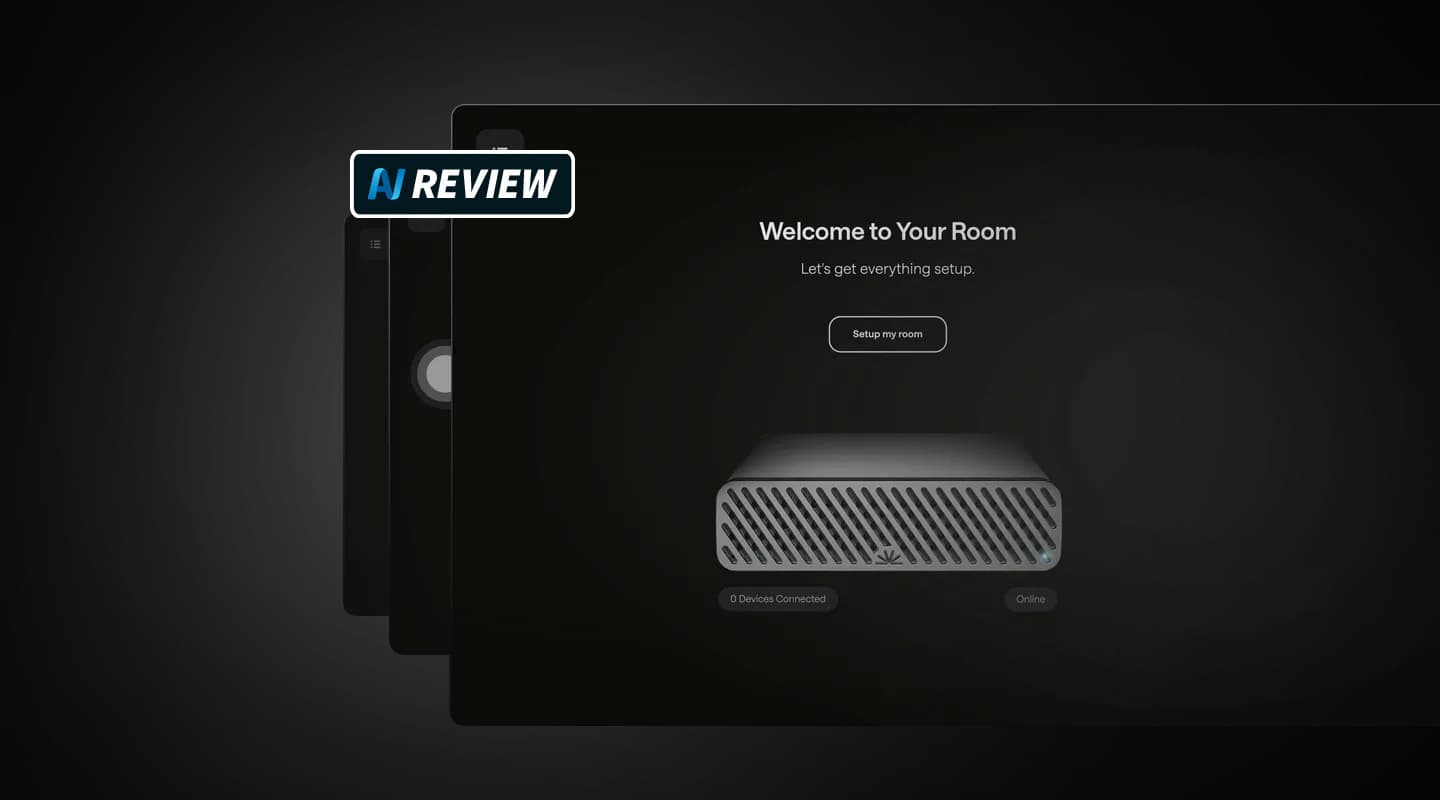
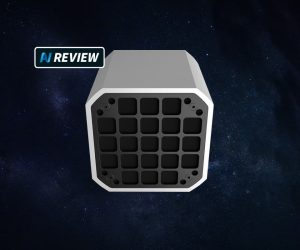
On my desk, as I write this review, I’m looking at a small, unassuming box. My initial impression?: thank goodness this is not a review of a small, unassuming box, or, for that matter, the software that drives it but a totally new platform from a new brand, Pleneo.
What Pleneo is introducing with RoomHub and Room OS is a different way of thinking about how medium and large UC rooms are deployed, operated, and supported over time.
Because let’s be honest: from a strictly hardware point of view, we’re already in a pretty good place. Videobars handle small rooms well. Larger spaces benefit from distributed microphones, external DSP, and multi-camera tracking. Audio quality today is less about whether the technology exists, and more about how consistently it’s deployed and maintained.
Where things start to fall apart is scale.
GO LARGE
Medium and large rooms are still delivered one at a time, tuned one at a time, and supported one at a time. Even with modern commissioning tools, outcomes depend heavily on expertise, time on site, and a fair bit of repeat effort. That’s the gap Pleneo is aiming to address — and Room OS is the core of that strategy.
Room OS is a software-driven operating layer designed to make rooms behave like systems, not projects. It combines local, on-device intelligence with cloud-based orchestration, so rooms can be deployed consistently, monitored as a fleet, and managed remotely — without relying on repeated manual commissioning.
THE HUB
The physical execution of that model is RoomHub, which I what I’m looking at now. It’s a compact, fanless, PoE-powered edge device designed to sit quietly behind the display. It’s lightweight, VESA-mountable, and intentionally unremarkable — because its role isn’t to draw attention to itself, but to run the room.
Inside, RoomHub combines processing technology with AI and machine learning, and it operates in tandem with Pleneo Cloud. Importantly, it’s designed to work locally in the room, handling audio and video at the edge, while the cloud layer provides orchestration, visibility, and lifecycle management.
Connectivity is simple and clearly thought through. Dual network ports allow you to segment traffic if required. USB-C supports both BYOD and in-room compute. Everything runs silently, with no moving parts.
GETTING A ROOM
When deployed, Room OS discovers connected components and validates readiness. From there, the system automates much of what would traditionally be manual commissioning. Audio optimisation is handled using ‘room-aware’ processing, with features such as adaptive noise handling, machine-learning-based de-reverberation, and voice enhancement designed to improve intelligibility across real-world conditions.
What’s important here is not any single feature, but the intent: to define how a room should behave, then ensure it behaves that way consistently — across rooms, buildings, and sites.
[[[For experienced AV professionals, Room OS doesn’t remove control. Deeper access is still available where required.]]] But it does remove a lot of repetitive effort and uncertainty, particularly when deploying multiple similar spaces.
For IT and UC teams, the appeal is most obvious. Room OS fits far more naturally into an IT operating model, where predictability, repeatability, and remote management are expected. Rooms become manageable assets rather than bespoke installations.
NEW BRAND
Pleneo is a new brand, but it draws on decades of experience from its parent company, Xilica. That heritage shows in the focus on audio quality, edge processing, and reliability — but the mindset is clearly forward-looking.
Rather than competing on individual devices, Pleneo is competing on outcomes: consistent room behaviour, scalable deployment, and reduced operational friction in medium and large spaces.
Room OS represents a shift from commissioning rooms to operating them. And for organisations looking to scale collaboration beyond small rooms — without scaling complexity — that’s a proposition worth paying attention to.
Audio Brands: audiobrands.com.au
Pacific AV: pacificav.co.nz
Additional Content:
Read our interview with Pleneo’s Jim Seretis here.



RESPONSES