

Review: Powersoft Nota
A category-busting micro PoE amp with surprises up its tiny sleeve.

11 February 2026
Review:/ Christopher Holder
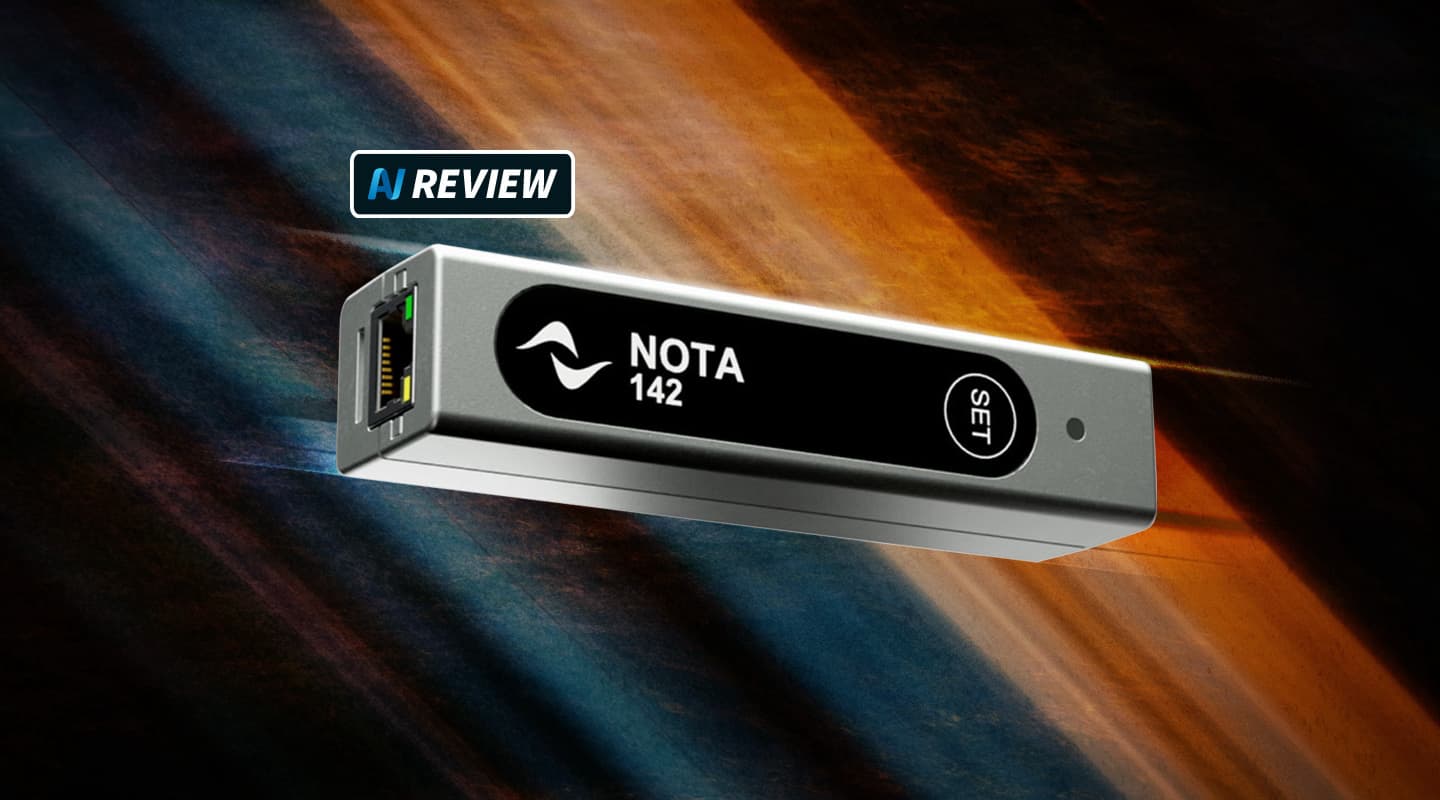
You probably already know about Nota – Powersoft’s micro amp. It’s made plenty of waves and already taken some standing ovations. But I can almost guarantee that there’s more to Nota than you think you know. But let’s start with what’s most obvious.
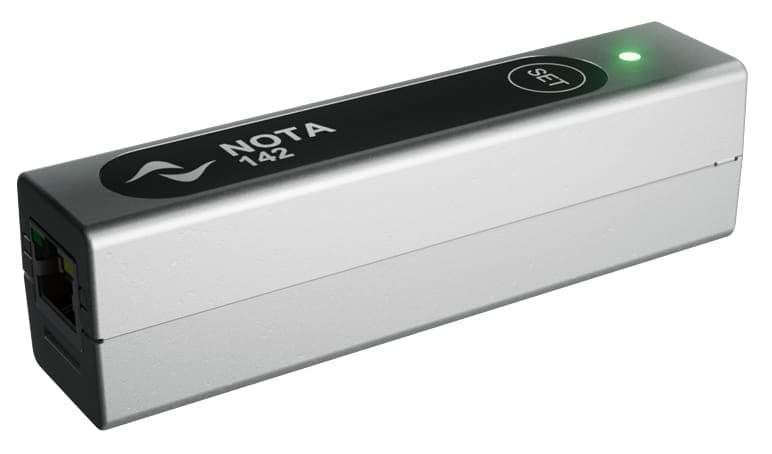
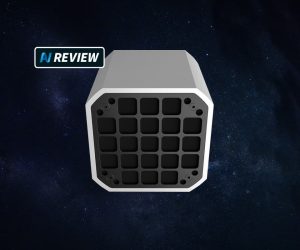
Nota is a PoE-powered two-channel amplifier capable of producing up to 140W of power.
Nota is smart. It knows exactly how much power it can draw from whatever switch you plug it into – whether that’s PoE or PoE+ – and self-limits its output to keep the speakers safe. It can also automatically impedance-match to your source down to two ohms and up to 16. It doesn’t do constant voltage power, only low impedance.
MORE THAN AN AMP
More than a PoE amp it can take two channels of USB audio via the USB-C port. In fact, without a network switch, Nota can act as a class compliant USB audio device, and use USB-C bus power to drive the amp.
But Nota is born to be on the network. And when it is, it can bridge USB audio. For example, plug a laptop into Nota’s USB-C port and it becomes a stereo AES67 on-ramp – your computer’s output lands on the network as a routable stream.
Nota is more than a dumb amp. It has onboard DSP, on par with Powersoft’s Mezzo platform, including priority paging, per-channel limiting, and enough parametric EQ to voice a loudspeaker properly. The DSP can run full loudspeaker preset compatibility including plenty of parametric EQ, delay and limiting – everything except FIRs really.
As mentioned to earlier, Nota is an out-of-the-box AES67 device. It’s not a Dante device but will be fine in mixed Dante and AES67 environments with proper QoS.
SETUP TIME
Nota is easy to set up. Those familiar with Powersoft’s ArmoniaPlus software have a headstart, where you can properly configure Nota and fine tune matrix and DSP settings but most will undoubtedly shortcut all that and configure Nota via its built-in web GUI. Once you’re plugged in, Nota has a ‘Set’ button that runs impedance sweeps and burst tones to auto-optimise gain, limiting, and high-pass filter for the connected load.
EARLY ADOPTERS
So who’s going to pounce on Nota as a lifesaving gamechanger? Interestingly, AV events companies are among the first to see the appeal. Already with a bunch of passive loudspeaker stock, on-site crew can respond to the unexpected by unrolling lengths of Cat-5 cable out to a position that needs audio – from there, a Nota amp and a PA box on a stand will do the rest.
For systems integrators, Nota slots straight into an AV design with a decentralised world view. It’s no secret that the IT department’s preference is to have full purview of everything on the network to the greatest possible extent. In audio world, often that purview stops at the rack with a network amp. Extending that monitoring out to where the loudspeakers are has real appeal.
Nota can be deployed anywhere a network cable reaches – behind a TV, in a credenza, in the ceiling, or clipped to a loudspeaker stand for a pop-up event. No rack space needed, no long runs of speaker cable, and no separate power supply to worry about. For environments where copper runs are expensive or IT governance demands everything be network-managed, Nota is a direct path to decentralised audio without the usual compromises.
PAVT: pavt.com.au





RESPONSES